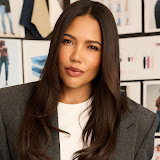
Tory Burch: I Didn't Realize It Was Negative to Be Ambitious | Aspire with Emma Grede
01:14:38Published April 29, 2026
Tory Burch started her company in 2004 with a single store on Elizabeth Street in New York City, a friends and family round of funding, and a belief that purpose and business belong in the same sentence. Twenty-two years later, she has 400 stores in 70 countries. 5000 staff and a two billion dollar revenue business- And she still hasn't had lunch. In this conversation, Tory sits down with Emma to talk about what it really took to build one of the most recognizable names in American fashion, navigating criticism, surviving a lawsuit that threatened everything she'd built, and rediscovering the creative spirit that reinvigorated her brand.
I am so excited to share my debut book with you all, Start With Yourself, which is available now.
You might have seen the headlines, you might have seen the social, but this book is exactly what I intended, a conversation that will make you think.
And it's a blueprint for anyone who wants success without the toxic positivity.
Start With Yourself is about self-leadership because wherever I go, women ask me how I got to where I am.
But what you really want to know is how you can get there.
So I'm doing what I do best, sharing and never gatekeeping what's worked for me in the hope that you can borrow from a philosophy that has served me so well.
The truth is, I'm not an expert.
I've just lived it.
I've made the mistakes, I've had the failures, and I've learned what actually works.
It takes a lot.
It takes the most.
And this book is for anyone who's tired of feeling like a passenger in their own life.
It's about taking responsibility for your thinking, managing your emotions, and getting clear on your ideas, and then knowing your next step.
It's about picking yourself up after failure, being accountable, but also forgiving yourself, pushing for wins, and never ever apologising for your ambition.
It's also about challenging the rules that you've been told.
There is no perfect time.
Balance isn't the goal, alignment is, and there's nothing wrong with you wanting more.
I'm precisely sure that the reason I've been so successful is so I can share it with you.
Start with Yourself, my debut book, is available now.
Visit emmagreede.com to purchase the book, also available on Amazon, your favourite audio platforms, and all good bookshops.
So today I'm speaking to Tory Burch, one of the founders that I admire the most.
Tory Burch has built an incredible American luxury brand worth billions of dollars.
What we're gonna talk about today is how she built a billion-dollar brand from her apartment in New York, why ambition is still a dirty word for women, and why she decided to step down
as CEO of her own company when so few women get to occupy that space.
You will not want to miss this episode.
And whatever you do, don't forget to like and subscribe.
I haven't had lunch in 21 years.
Tory Burch has redefined American luxury and built one of the most recognizable brands in fashion.
The brand spans 70 countries with over 5,000 employees.
Flying back and forth to Asia, managing 3 boys, working out of my apartment, going to 120 friends and family.
And I was terrified about taking people's money.
And then it got so much harder.
A very public divorce, but then also a very public lawsuit where he decided to build a brand that looked like a cheap version of our brand.
I mean, I will tell you, I remember when that happened.
COVID closed 375 of her stores overnight.
I get better and more focused in a crisis.
22 years in, Tory Burch is the blueprint for what it takes to build a brand that lasts.
Whatever ambition means to you, whether it's being a stay-at-home mom or a CEO, it's really about living on your own terms.
What advice would you give to a woman who's been labeled as too
ambitious?
Tory Burch, welcome to Aspire.
Oh, I'm so happy to be here.
Thank you.
I am so happy to have you.
I've wanted you to come on this show for the longest time.
Me too, and I can't even believe it hasn't even been that long.
It feels like Wow.
It's really true.
We're coming up to almost a year, but you were one of the people that I wanted to speak to so much because I always, in my own life and my own career, I like to project myself in your
kind of lane and say, you know, if Tori can do it, you can do it, Emma.
She's got all of these children and this company.
You've done it so well.
When I think about you and what you've done, you've built one of America's most iconic fashion brands, which is so incredible.
We're talking billions of dollars in sales, 400 stores around the world, which is so incredible.
A true global brand.
And I've been reading and researching so much about you, and I really want to take people back to the beginning and to understand exactly where you were when you decided to go and do
that friends and family round, take a bet on yourself.
It takes such an enormous amount of ambition, and I just want you to take me back into that moment and tell me, where were you and why did you how did you have such certainty that you
could actually do this?
Yeah, well, let's start with I had a career that I loved and I was working for LVMH, working for Loewe, and I got pregnant with my third son.
So I had three babies under the age of four, three boys under the age of four.
Wow.
And so I was traveling to Paris and Spain and realized that I wouldn't be able to be a great mom.
So I had to make one of those decisions that a lot of women have to.
And it was really, choosing being a mom over a career.
And that was a really hard choice.
I mean, it wasn't hard to choose being a great mom, but it was hard to give up a career that I loved.
And so it was during the time that I was a stay-at-home mom that I worked on this concept because I knew I wanted to go back to work.
I just didn't know what that work would be.
So in tandem, I was working on a school, starting a school, and I was also working on starting a company.
And it was about reviving a company from the '60s and '70s that my mom used to wear.
It was called JAX.
Really?
Yeah.
That's what you were going to do?
I was going to do it.
I worked on it for months and decided finally that the school would go off to the side.
I would try to start this company.
And there was this great entrepreneur named Sally Hansen, and she had hired Rudy Gernreich, who was the designer at the time.
They started this company called Jaxx.
And the best way to describe it is like it was great pieces that were impossible to find.
Right.
And Audrey Hepburn wore it, Jackie O, all these incredibly stylish people.
What happened to Jaxx?
And so it went out of business, but I had a lot of— the clothes because my mother wore it.
And so I did all of this research, I spent months on it, and I got in touch with this incredible woman named Corby who used to run their New York showroom.
She ended up getting me in touch with Sally Hansen.
And after months of work and a giant presentation, I got her on the phone.
Are we talking Sally Hansen, like— Hard as nails?
Yes, yes.
That Sally Hansen?
That Sally Hansen.
She's an incredible entrepreneur.
And so I called her, I got every bit of courage up to give her a call, and 30 seconds later I realized it was a hard no.
Really?
And so that's when—
How'd you take that?
I was just blown away because no didn't occur to me.
And so I thought it was going to be a given that it would be called Jack's and it was, so I had to start over.
Did you immediately decide, okay, I'm gonna go and do my own thing?
Like how long did it take you?
So when you've got a vision for something and then you get that type of knockback, sometimes that can be hard to take.
Like what did you do?
I went and I started to think about branding and then I hired a branding company and I started to think about an interior designer called David Hicks that was in London.
He was a big inspiration.
My parents had books on him.
My mother loved his work.
And I was like, okay, if I'm going to do a company, I didn't want it to be my name.
I was trying to get so many different names, none of which I could get.
I launched with a terrible name and also a logo.
And it was because I couldn't get Jax.
And that was why, that was the start of me doing my own thing.
Are you absolutely kidding?
So it was totally unintentional.
It was not my plan, but I had to pick it.
That is so crazy.
So how did it turn into Tory Burch, your name, and this kind of initial friends and family round that you were now in?
Well, so that takes a little bit of a while.
I started it with my ex-husband who had a history of a company called Eagle's Eye.
So he, he did the production in Hong Kong and I, so he had that knowledge.
So we, we started this company.
I had this logo, people had so many different opinions.
I had this idea.
It was very, it was contrary to everything that people had told me to do.
So it was a direct-to-consumer concept.
It was an e-commerce site.
Oh, direct-to-consumer.
Moment, which year was this?
It was 2004.
Okay.
So I was planning in 2003, but no one was selling online.
So people told me no one would ever buy online.
So I launched with an out-of-the-way store down on Elizabeth Street and an e-commerce site.
And the very first day we realized we were onto something.
What was it that gave you that idea?
You know, it was just, it was, first of all, the work leading up to that was excruciating.
It was like flying back and forth to Asia, managing 3 boys, working outta my apartment.
So there are all these things that went into it.
Opening day, it was, I had grown up in fashion and had this great career.
So it was press, it was friends, family, and we opened 10 in the morning till 6 at night.
And it was almost as if it was building throughout the day.
People were hearing about it and then coming down.
It was during Fashion Week.
Just what you want.
That word of mouth, it just is tracking, it's bubbling.
Never could I have imagined or planned.
It just was one of these things that just sort of started to take shape.
And we realized we basically sold through our inventory.
What were you imagining at that point in time?
Like, did you have a vision that it could be anything like it is today?
Well, I had— I hear myself and some of the things I said, and I, at the time, in retrospect, had no idea what I was talking about.
I said I wanted to build a global lifestyle brand so I could start a foundation.
That was my— that was my— I heard people told you not to say that.
Everyone told me not to say it.
They're like, just leave the foundation part out.
They patted me like, oh, that's charity work.
And they said, that is just the worst idea.
But I had this like vision and I don't know exactly how I got to this point, but I knew that I had this feeling that purpose and business went hand in hand.
And if you could, doing good is good for business.
And that was sort of my theory.
Yeah, I mean, that was really early on.
And I remember when we started Good American, we had the same, I remember looking at your brand and saying to our, bored at that point, I was like, well, Tory's doing it.
Like, and you were the only ones that were doing it and doing it successfully.
There was someone else.
They were like, park it for now.
You know who else is?
TOMS.
I was kind of— yeah, TOMS was maybe around the same time, although it was just— yeah, because it was like a single, you know, it was like just this one shoe.
It felt different, but we were really benchmarking.
I remember in the beginning going like, there is so— like, Tory is doing this and she seems to be like making a business out of it.
Doing my best, I'm not sure.
Um, you said early on that you didn't feel like a designer.
Like, how long did
How long did it take you to kind of own that part of you?
I would say, you know, a long time.
I have to say I didn't have, I didn't go to business school, I didn't go to design school.
So for me to consider myself a designer just because I started a company, it was a stretch in my own imagination.
I didn't feel like it, I didn't feel it internally.
So it was kind of, you mentioned in one of your notes imposter syndrome.
I don't know that I had that, but I didn't feel that I had earned it.
And I felt like I had to get the knowledge.
And throughout the years, I would say, Probably 10 years until I felt I had the technical skillset where I really felt like I was a competent designer.
You started the company with your husband.
Yeah.
And that's no longer the arrangement that you have now.
So I'm interested to understand what was kind of happening behind the scenes there.
Yeah, I mean, it was rough.
I had this idea, it was us putting a lot of money into it from our personal funds that was not a tremendous amount, but for us at the time it was.
And then going to 120 friends and family family.
And I was, first of all, terrified about taking people's money.
It kept me up.
And that was one of the things that kept me up every night.
And I just said to them, invest what you can lose, because I was really worried that I'm starting— doing a startup.
That was my pitch.
But I said, listen, this is what I'm going to do, but don't put in money that you don't have to lose because it's a risk.
And I'm a careful risk-taker, but I am a risk-taker.
And so we, we started— he never worked with me in the in the office, but he helped me set the whole company up.
But what we realized, or what I realized very early on, is fundamentally we were incredibly different the way we saw building a brand.
And I can say that now because, you know, we're great friends now, but it was incredibly rough for a long time.
Yeah, I mean, people say don't go into business with your significant other.
I can't say that because so far it's working out all right, quote unquote.
Well, and I can't say that now.
But yeah, there was a moment there where I imagine that was so much stress on your family.
Oh, it was horrible.
It was horrible.
I mean, going through, well, two things, a very public divorce and having 6 kids that I love dearly and wanted to protect and being a very private person, but then also a very public
lawsuit where he decided to build a brand that looked like a cheap version of our brand.
I mean, I will tell you, I remember when that happened.
It was shocking.
It was shocking.
But it was like the talk of the town.
Like it was a thing.
And I remember even, that was like in the early days when I'd really started to understand investing.
And I knew people around me that had kind of been like, well, here's the next Tory Burch.
And I was like, hang about one second.
I mean, it was bad.
He would say things in a board meeting like, you're a PR girl.
It was really bad.
And so I can laugh with him about it now because he told me it was a 10-year misunderstanding.
And so we've moved on.
Sorry.
Very eloquent way to put it.
I've always wanted to get along with him.
He's the father of my children.
Of my— and he's great and I adore him now, but what he put me through is just hard to believe.
How did you have the confidence and I guess the wherewithal to understand how you were gonna get yourself out of that situation?
Because right now it kind of feels like you're sitting on top of the world, but I imagine at that time it's very difficult when somebody literally sets up what was perceived outwardly
to be your competition.
You obviously have a family together and so the dynamics are really difficult.
So as a business person, how did you even I mean, how did you deal with all of that?
I mean, I feel like work was a bit of a refuge and a safety.
It was, for me, I've always wanted to think about culture and an environment for women.
And I, in a way, built that for myself.
And it was a place where I could go and feel safe.
And not that it was unsafe being with him, but it was a terrible time.
And so I think that I had this relentless drive.
I'm not sure exactly where that came from.
I think I might.
I always, in, you know, thinking a lot about our conversation, I thought a lot about ambition and I've always been ambitious, even though I didn't realize that's what I was.
Like even from working at Benetton in high school or starting a sorority at Penn or whatever it was, I didn't realize that I was, it was a negative to be that way until this article
in the New York Times was written on me and I shied away from that word, so.
Will you just speak a little bit for anyone who hasn't seen that article?
Will you talk about that for me?
So there was an article the first year of our business and it said, "Call Her a Socialite." And it was, I recently reread it thinking about our talk.
And so the journalist asked me if I was ambitious.
And at the time it was a very derogatory expression for women.
And so I clearly shied away from the word in the article.
Jane Rosenthal called me up and she said, "Great article.
Don't you ever shy away from your ambition." And it was something that was like a light switch for me.
It was immediate.
I realized she was absolutely right.
You're absolutely right.
I was mad at myself because I prided myself on thinking I could do anything a man could do.
I never, it never occurred to me that I shouldn't be proud of being ambitious.
So it became sort of something I wanted to really clear up for me and for women.
I love that, and clear it up you did, because I think it's really interesting having just come out of this process of writing this book and now releasing the book.
Ambition is such a tricky subject for so many women, and the negative connotations Even now, 20 years later, are still there.
When we talk about a man's ambition, we conjure up all of these images of somebody great and exciting.
And as soon as we say she's ambitious, we're maybe thinking about a little bit of a bitch somehow.
She's rough, she's a bitch.
She's like— All of those things.
Distasteful.
How much do you think has changed in that time?
I think it hasn't changed enough.
And if I'm really analyzing it, I think if you ask my 3 boys, they think it's changed, which is interesting, but— I love that.
I know.
I'll take it.
And that's a bit of hope, I think.
I think it's also the pressure you put on yourself and we as women put on ourselves and believe in these negative stereotypes.
And that's something that we need to stop and collectively and support each other.
But we need men to support us too.
Yeah, we need all the things.
I don't wanna have the conversation with just women because we'll get nowhere.
Well, I mean, I think that's a really, really fair point.
I remember years ago when Sheryl Sandberg wrote Lean In, I went out, at the time I ran an agency, And I went out and bought it for every woman in my organisation, read the first 3 chapters
and went back out and bought it for every man.
And so when I think— Yeah, that's great.
When I think about my own book, I'm like, this needs to be something that men read and something that women also read.
I don't want it to go one way because as you quite rightly say, we need men.
We need men in so many different ways in business.
You're such an expert in what it actually takes to create a brand and build a business.
So let's go back to those early days when you went and did that friends and family round.
You're calling 120 people.
20 people to actually ask them to invest.
What, like, what were you saying?
What were you thinking?
What were you pitching?
I mean, I had this goal in a way and vision to, and I was determined.
I think even our biggest investor who told me never to say purpose in business, like I called him maybe 3 years ago and I said, it's so funny you said that.
I still remember that expression you said to me.
And I just came from a conference doing good is good for business.
And he's like, okay, what do you want?
And I said a check for the foundation, naturally.
I mean, there were so many things that happened constantly of, you know, things that you were being put in your place or things that you shouldn't say quite like that, or you should
think this way.
I think it was a lot of noise to me.
That's one thing I learned from my parents is that negativity is noise.
And so I learned to tune things out and I learned to be a good listener, but take it in, but not necessarily take it to heart.
And not take it personally.
And you know, more often than not, not take it personally.
Of course, sometimes it gets personal and I try to not be emotional, particularly in a board meeting.
I've learned that lesson.
It's much more effective.
It's much more effective.
I just wanna be more effective.
I can't say that I haven't cried outside many a board meeting.
Yeah, but I had to learn that.
I mean, you can imagine what I went through in a board with— I remember one of our partners told my ex-husband to leave it at the door.
Wow.
So I really like that.
Wow, that's just incredible.
Yeah, but it was hard, the beginning, you know, some people would look at me and say, "Do you go to the office?" I haven't had lunch in 21 years.
I can't even imagine.
I work as hard, if not harder than anyone.
And it's been, it's been this incredible journey.
It's work that I love, so it doesn't feel like work, but it's shocking sometimes to think people like question that and think that it just happened out of thin air.
I love that they asked you that 'cause I think I'm asked on average once a day, including today, "Do you actually work here?" And I'm like, "5 days a week." But that's something they
would never say to a man.
Ever.
So.
Ever.
That sums it up.
Which is, you know, and I don't want to sound whiny, but I think that the, you know, I'm looking, thinking about an article that came out yesterday, which was the first article about
my book.
And the headline was, a headline that would never be written about a man, about how long I would choose to spend with my children every day.
And I just thought, wow.
That's brilliant.
I haven't seen that headline.
A very, very reputable newspaper, I will tell you, not trash, you know, magazine stuff.
And it's interesting to me.
That's why it bothers me.
I'm curious if they did.
Did they list your age?
Absolutely.
Because they never do that with men.
That's something I want to clear up as well.
It's crazy.
It's crazy.
It's crazy.
Every article that's ever been written about me lists my age.
And they have— I've never seen an article on a man where they list their age.
Have you?
I'm really thinking about it now.
They don't list men's ages.
But how dare they say that to you?
They're not my hours.
I kind of shrugged it off because— You should.
It was one of those moments where the internet did what the internet does best, and every single woman was in the comments saying, what is this all about?
I would comment myself.
That's crazy.
What is this all about?
I wanna go back and talk to you about this, because you were starting in e-commerce when no one, especially in the luxury space, was really in it.
What was it that you saw that perhaps other brands missed?
I mean, for me, it was a scrappy way of reaching our customer.
Mm-hmm.
And so I had to be resourceful because we didn't have big budgets.
We didn't have a lot of money.
We started on a little shop on Elizabeth Street because the rent was so cheap.
There was nothing there.
And that's why I used social media and PR to build the company.
We never— we never did traditional advertising.
Advertising because we didn't have the budget.
So we had to be resourceful, as I said.
So that was sort of how we started that.
It's so interesting because it feels like, you know, it's only 20 years ago, but it was a different time entirely.
And you were like a real first mover in that space.
But I'm interested in understanding like what you chose in terms of categories and expansion.
Like who gave you that blueprint?
Well, no one did.
In fact, from day one, I launched with 10 categories and I was told not to do that.
So, and just the idea of course I mentioned direct-to-consumer, but for me it was lifestyle.
And I think everything from a strategic standpoint that I started with is still relevant today.
Interesting.
And that's exciting because we launched with 10 categories.
So then we sort of built them through time, but I was early adopters of technology.
It was something I'm still obsessed with.
I think it's so, I mean, when you look at what's happening now, it's kind of hard to decide what to do and what to jump onto.
Back then, when you think you had an e-commerce site,
revolutionary.
So that was one thing, Instagram.
Then you had Twitter, but I was on it and I was really interested in thinking, how do you use this to connect with people?
I remember because I think at one point you guys were working with one of our agencies.
I think you were working Wednesday, and we were like, wow, like Tory Burch is like— so you guys, you guys were there too.
Yeah, we were there, we were there too.
But again, there was not much competition and we were usually explaining it to brands.
Well, it seems like— this is what an influencer is.
They kind of thought like maybe it's low level, it's not sophisticated.
And it was just changing.
The world was changing.
So tell me a little bit about the catalyst for the brand really taking off, because I think about two things.
I think about this big Oprah moment.
And then I think about the shoe.
And you could not walk down— The shoe, my mother.
The shoe, your mother, the Reebok.
But you couldn't walk down the street without seeing that bloody flat absolutely everywhere.
And I remember like I would go go to Selfridges and there would just be a queue of women waiting for this shoe in any color that they could possibly get their hands on, which is so
crazy to me.
It's so crazy.
I mean, listen, Oprah was the first year of business and Adam Glassman was a friend and we worked together and he gave Oprah some clothes for Christmas and they were doing a show on
The Next Big Thing.
And when they first called me, I thought it was a joke.
I have 3 brothers, we are constantly playing practical jokes.
I'm like, oh, okay, playing along with it.
And so I realized it was real that they wanted me to come to Chicago and be on the show and have a fashion show.
And so I'll never forget it because when I saw Oprah, she's like, "Well, you've been on TV before?" I'm like, "No." And so she said, "Don't worry, it's only 8 million." No, 30 million
viewers.
And so, but what was great is I had an e-commerce site and they did explain how we had to back it up and it didn't crash.
We had 8 million hits the next day and the next following week.
And so we were prepared.
That was year one.
Year one.
So talk me through, how did things then scale?
Like, what did it actually look like for the business?
So we— I had a plan of, I think, 3 stores in the first 5 years.
It became 7.
And then it just went on from there.
But I was traveling nonstop.
I had these 3 babies, 3 boys growing, and trying to be CEO and creative and manage both.
How did you do it?
How did you take your family and what was going on in your personal life and this incredible brand that was on such a crazy trajectory?
How did you do it?
You know, I think I am very good at compartmentalizing, and I also have this drive.
I think it's almost the opposite of my father, and he never had a proper job.
He He was taught that he didn't have to work.
And so my brothers and I all saw that, and we went the opposite way, and it gave me more drive.
But at the same time, we saw money come and go, and I will never forget the conversations that I had with my mother saying, "You always need to be financially independent." And that's
something that she raised me with since I was a little girl.
I remember even her telling me, I remember it was a conversation when she was telling me she got a credit card in her name for the first time, which is 1972 or '73, which is shocking.
And she was saying how she never wanted to rely on her husband, a boyfriend, anyone to be financially secure.
And so that is something I was raised with, and I think that is where my drive comes from.
Whether it's professional athletes, founders, or people operating at the highest level, the thing they tend to have in common is that they're drawn to things that are simple but foundational,
the kind of habits that quietly support everything else.
And that's what makes Amra Klosh what makes Spectrum stand out.
It's a bioactive whole food with over 400 nutrients that work at the cellular level to strengthen immune health, support lean muscle, and fuel performance and recovery without anything
artificial or synthetic.
It's clean, it's potent, and it fits into your day without adding complexity.
4 daily scoops and you just move on.
What I appreciate is that it's not trying to do something to your body.
It's giving your body what it needs to operate at its best, even when the schedule is relentless.
Skin, hair, metabolism, gut health— it all connects.
And when the foundation is strong, you feel it everywhere.
We've worked out a special offer for my audience: receive 30% off your first subscription order.
Go to armra.com/aspire or enter ASPIRE to get 30% off your first subscription order.
That's armra.com/aspire.
Did you recognize realize early on that you were capable of really running a global business?
Was there doubt?
Was there any imposter syndrome?
I mean, I think yes, always.
There's all kinds of doubt.
In a startup, as you know, something happens every day.
And so you just— I'm very— it's almost grace under pressure I think a lot about.
And the more frenetic things get, I get more focused.
And that's something I get from my father.
My mom is a bit different.
I wanna dig into the risk thing a little bit more because that's something that I think so many women struggle with, like actually taking big risks.
Because if you don't, I mean, you would never have a brand like you have today.
No, you're right.
And I inherently am a risk taker and even a personal, I used to go bungee jumping.
I used to do all these crazy sporty things that were probably not safe.
So, but I have an older brother who helped me build the brand and he was always dialing me back.
So I'm the one who is always pushing and then he would be pulling.
And so we had this tension and I think that was very important.
And he's still with me today.
Is he still involved today?
Yes, I could never have done this company without him, Robert.
And he really helped me.
He came after the company was 2 years old.
He sold his company and I convinced him to come on board.
And he's really helped me really build it.
When you look back, what do you think have been some of your personal biggest challenges?
What are your biggest wins?
Well, I think the foundation has to be a win, but I think the company, I look at it as a second family.
Our employees are— I'm great at picking great talent and great people and surrounding myself with incredible people.
So that's a win for me.
You've always been good at that.
I said, I think I am good at that.
And I think I've learned when I'm not good at it to react and quicker.
I haven't always done it quicker, I think, you know, I definitely try things and I've learned how to hire better and take my time more and not hire quickly.
I think I never try to hire when I'm desperate for a role.
That's a piece of advice I give to entrepreneurs, like take your time and get to know someone and get a lot of references.
That's great advice.
You really need a lot of references.
It's amazing how many people don't reference.
Well, that or believe in a culture, you know, our culture is really unique for our company and that's not a culture that everyone fits in.
Into.
And what is that culture?
Well, it's one that is, I want a safe environment for people.
I want people to be treated beautifully.
I expect great work, but I want a great place to work.
I mean, it's a vastly different company.
You have 5,000 employees, I think.
Yeah.
I mean, that's nuts to even think about.
So what are you like as a leader, and how much have you learned and have to change and shift and adapt?
I mean, I've learned everything, but I will say that one thing I don't do is I don't micromanage people, and I think I let them shine.
And that's something I love to do.
And it makes people feel great, but it's because it's real.
And then you get their best work.
So I think I'm patient, not always.
I'm definitely a perfectionist.
And I was talking with Honor and Francis earlier today, and I was like, I know I'm precise and definitely like, they, you know, waved their head, yes.
It's not always easy, but it's always coming from a good place and out of respect.
I just feel like, you know, leadership is something that no one teaches it to you.
You have to find your way and your style of leadership.
How are you as a leader?
I think a little bit similar to what you're saying.
I have extremely high expectations, but both on myself and on everyone else.
Right, but you'll do everything you're asking someone else to do.
I'll do absolutely everything.
And I think that there's a respect level because I've come up through the ranks.
It's like I've done all the jobs.
I understand exactly what I'm asking somebody for.
So there's not that— But I don't know about you, but I can work work around the clock, and you have to be careful of that.
That's literally— you took the words out of my mouth.
I think that what I've had to be really careful of is expecting the same energy level that I have.
And of course, as a founder, as the entrepreneur, as the name on the door as you are, there is an expectation that you have that not everybody else has to share.
But I think that that was harder for me to understand maybe in the early days.
Yeah, it is hard.
And you are working, it doesn't feel like work for you, but that's not always the case for people.
They have a family, they have commitments, and— That's something you have to remember.
Yeah, and you have to balance that a little bit.
You've said that women have to make decisions that men simply don't.
What do you mean by that?
Well, I mean, women have expectations, whether they put it on themselves or societal.
And I think whether it's being the caretaker, taking care of the children or their parents, and we certainly see that with COVID and our entrepreneurs.
Women are the first to give up a career.
And you know, that's something, when I talk about ambition, ambition with women.
I remember phrasing it saying, whatever ambition means to you, whether it's being a stay-at-home mom or a CEO, it's really about living on your own terms.
And that's something that's really important.
And that's how I look at being ambitious.
But women just are held to different standards.
And that's something that is not changing.
Yeah.
It has to change.
I couldn't agree with you more.
I mean, this— I love that you say whatever ambition means to you.
The reason I I called my book "Start With Yourself" was for exactly that reason, because you have to start with your ambition, your vision, how you wanna live, what type of woman you
wanna be.
And that's very different for different people.
But I do think that we're still in a place and a space for so many women where there are a series of thoughts or ideas that exist in the culture that do hold women back, that do make
women have to keep themselves small.
And I wonder— And even holding yourself back, right?
And that's part of it.
And I really want to, I wanna talk more openly about that because I do think that, you know, sometimes maybe the reluctance to talk about money or the reluctance to come across as too
ambitious or the reluctance to, you know, maybe exhibit some type of behavior that's not deemed so eloquent and elegant can be holding women back somewhat.
Do you recognize that at all?
[Speaker:KATIE] I do.
And I remember growing up, I was taught very concretely not to talk about money.
And then I saw a shift and I would see, and I would say this to my mom, She is the most impressive entrepreneur.
I remember when we— and they used to say money's round, it comes and goes, and don't ever get too secure because you have to be careful with it and you take care of it.
So there was a time when she felt like she needed to work, and so she started— she was doing flowers and parties, and she started this crazy business.
And so I think that was inspiring to see.
What advice would you give to a woman who's been labeled as too ambitious?
Well, I would say tune it out.
That negativity is noise.
And I'm not sure what that means.
You know, I think that it's something that should be celebrated and it shouldn't be around gender.
Yeah.
And ambition should be a personal thing and people should think about what ambition means to them.
Yeah.
But it's not something to have a negative connotation around.
Around women, and that's something that has to be addressed.
And I think it's a conversation that just needs to continue.
So I love that you're doing it.
I love that women— When I started 20 years ago, there were no— there weren't a lot of role models for women.
No, there really weren't, which is one of the main reasons I love to do this show, because I think the more we see examples like you in the culture, the more we can understand it, and
we can see ourselves in it, and we can envisage it.
But not if we don't have the conversation.
Conversation.
I'm interested how motherhood, like, shaped your approach to business and to leadership.
I understand that there were, like, probably trade-offs that you had to make, but what did that really look like in practice?
I mean, one thing I would never trade off was being a good mom.
And that was something I never thought I could start a business if that were to have to happen.
But what does that look like to you, Tori?
Because I feel like even that in of itself, like, what it means to be a good mom, it's different for everybody.
What was it for you?
What did you need to do?
That I— well, first of all, I was, you know, my husband was there, but not, you know, when we got divorced, I was raising my kids a lot on my own.
So it was being at the doctor, going to a lacrosse game.
It was also starting a company that allowed women to be able to do that and not penalize them for that.
And so I thought, how do you build a culture around flexibility?
How have you been able to do that?
I have done it.
And what I say is that as long as it gets done, I'm not really clocking how it gets done.
It's done.
Same.
I think the same.
And I think you create those conditions so much yourself.
Like, I leave the office every day at 5:00.
That's because I like to go home and I like to do bath and bedtime and story.
But it creates the conditions for everybody else to leave at 5:00.
Yeah, and I used to do that, maybe not at 5:00, but I would be a stickler for being at home.
I would say if anything suffered, it was my social life.
But I— listen— That's always what gives.
That was fine with me.
But I will say, like, being a mom is the joy of my life.
And I often say I'm a survivor of raising 3 boys because it's It's hard, it's not always easy.
And they look at me now, they're in their 20s, and they apologize for what they put me through.
I mean, 3 boys in New York City, you can imagine.
Oh no, I can't.
And they're 3 little like torturers.
They used to bully me.
And so, but I'm tough.
Because you're so dinky and they're all— And they're giant, but I'm very tough.
And so I was a tough mom.
You were?
Yes, very tough.
And when you say like a tough mom, like you had to have rules and a schedule, like what do you mean?
I had rules.
I, you know, was on them.
I was like an investigator.
Yeah.
So— Just to keep everybody in check.
Keep everybody in check.
Keep everybody in check.
Do you feel like there were sacrifices that you made because of the children, like in the business?
You know, I think I managed, and I'm not sure, like, if I feel that it was a sacrifice.
I think I managed around.
And, you know, I guess the only thing that was sacrificed is my sleep.
I never, I still don't sleep, but I think, you know, for me, I would, you know, get the kids handled and put to bed and then start work.
And so that was kind of, but it was enjoyable.
I'm not complaining, but it's just when you have a company, you, it's, but at the same time, I will say I can turn it off very easily too.
So I have, yeah, so I have a lot of outside passions that I love.
I want to talk about all your passions because I love the fact that you're, you're so well-rounded.
But before we move on, just for me to understand, do you— when you speak to women that are, you know, perhaps debating starting something or leaving a job, having a family, when to
do it, like, what is the advice that you give?
I, I tell them that they have to do what's right for them.
And starting a family is something that a lot of women feel the need to do.
And so for me, like, I, I don't want women to have to make that choice of leaving a job because of that.
So that's something that I question whether they're at the right working environment if they feel that they have to do that.
That's a big conversation we have is, are you working in the right place?
Is that something— are you gonna be— feel like you're gonna be left behind?
A lot of attorneys, a lot of bankers, they feel like if they have a child, child, it's over for them from scaling.
Yeah, you know, I, I see that so much.
Do you think that, um, the idea of what it means to be a mother or a parent has changed in like the last 20 years?
Like, when you see, uh, social media and you think about what it means to be a mother right now, do you see big differences?
I think people are deciding whether they want to have children in a different way.
And I, I see a lot of people choosing not to as well.
They don't feel like they can do that.
That's what I think.
I, I, I really think that, you know, parenting hasn't changed that much, that the expectations on parenting has changed enormously.
I think when we're watching people on social media kind of do insane things around their children— I don't know, like making a really like elaborate packed lunch, for example.
You know, the pressure.
And that's just like a small thing.
The perfection of it all.
That level of like, okay, like I'm just gonna overparent the situation.
I'm gonna create these insane schedules and these insane lunches.
In a way, I'm glad I have my kids.
I mean, yeah, because I think that women do absorb that.
They do look in their fingers and think that that's— And they feel they're inadequate.
Absolutely.
And it's not real.
And it puts the pressure on.
It's not real.
It's not real.
I think there are many ways to come into parenting And my point of view is that I don't think children need nearly as much as we might think they do.
Well, we know that we, you know, the whole concept of a helicopter mom is a real thing.
And so I think kids, I used to entertain myself outside in the country.
Oh yeah.
We were left to our own devices.
Yeah, I mean.
If there was an apple in the house, my mom was like, they'll be fine.
But I remember during COVID my boys were enjoying Miami a little too much.
So I sent them to work with Navy SEALs in North Carolina.
Lineup.
No, you didn't.
You really are a tough mom.
It is the best decision.
If they wanted a bath, they had to build it.
And so it was like— So we were all taking it easy.
No, because we were going out to parties in Miami during COVID You're like, no, no.
I said, this is over.
You're like, that is not what we're doing.
Right.
Was that a hard time for you in the business?
Oh my God.
I mean— It was brutal.
It was brutal, right?
It was so brutal.
If you think about 5,000 employees, you think about 400— well, at that point, 375 stores.
Doors shut.
We had no visibility on when they would open, if they would open, and we had to pay healthcare.
And so I was trying to figure out how do we do the payroll so people could get healthcare.
And it was very real because that March, someone very close to me that had worked with me for 15 years, I was in a meeting with her on Friday and on Monday she was dead.
And it was from COVID And I just knew she hadn't come to a meeting and I was really worried about her.
And that— it was 4 days after I was with her.
And she— anyway.
So we knew it was incredibly serious, and it was incredibly tough.
How does Tori cope in a crisis?
Well, I get better in a crisi— I don't want to say that, 'cause I don't want to— I don't want you to be tested.
I want to keep them coming.
But I do get pretty— I get better and more focused in a crisis.
I think I was also trying to help our industry and working with the government.
Government and, you know, being in touch with Kevin McCarthy and Steve Mnuchin and trying to get payroll for like, and getting our industry to be considered as big as the food industry
or the airline industry because we're talking about over 14 million jobs.
Most people during COVID kind of went into a hole and was like, okay, let me just like see when this can go away.
But you are out there fighting for your industry, having bigger conversations, trying to expand into new spaces.
And the same with the foundation.
It's so much bigger than the business and the brand in so many ways in terms of like really changing people's lives.
Where does that come from?
I mean, I think if being able to have a company that can be responsible for positive change is something that is very inspiring to me.
And it's something that I've— that's why I started our company is not only to be financially independent because that was part of it, but it was also how can we impact as many people
as we possibly can.
And I would say that came from me since I was a very little girl.
I've always wanted to help people.
I was, I grew up in a kind of crazy environment of my parents taking so many different kinds of people in, never knowing who's gonna be at the dinner table, like having a kennel of
German Shepherds.
We had 50 Shepherds.
My parents would have all these kind of crazy people come.
And so I just saw a lot a lot of interesting, different kind of people.
And I also saw a lot of people who struggled.
And so for me, a second, almost my little brother who we adopted, he came with his mother, she had schizophrenia.
So I saw a lot of the hardship of mental illness and what that meant.
And so I've always wanted to give back.
It's something that, and I thought if the company could do that, that's such a way win.
It's such a win for the bottom line also.
One of the things we've always cared about at Skims is that intimate shouldn't ask you to choose.
You shouldn't have to pick between something that feels good and something that actually supports you.
That compromise has existed in this category for way too long.
Our fabric, Everyday Cotton, is the latest expression of that.
We wanted to create something that feels as easy as your favorite broken-in t-shirt but is still designed with real structure and attention.
The cotton is soft and breathable in a way that you feel immediately, but it holds its shape.
It moves with your body instead of working against it.
If I had to pick a favorite, it's the Triangle Bra paired with the Hipster.
It's lightweight, it disappears under clothes, and there's just no adjusting halfway through the day.
That's the standard.
You put it on and forget about it because it's doing exactly what it should.
We built Skims around the idea that pieces closest to your body deserve the most thought.
Everyday Cotton is the same philosophy in its simplest form.
Shop Everyday Cotton and all of my favourite bras and underwear at skims.com.
And after you place your order, be sure to let them know that we sent you.
Select podcast in the survey and make sure you select our show in the dropdown menu that follows.
I'm really interested in this subject because I think it's way more prevalent amongst female founders and entrepreneurs.
Than men, that they want to include some type of community impact sentiment within their brand.
And I always think about that as being an incredible thing to do when you can do it, when the business has the, the roots, the profit, the infrastructure to be able to handle it.
How did you introduce that to your brand, and what do you think about that more generally?
Yeah, I mean, well, it was my business plan from day one.
So for me, that was something that was in my head, I think it was a long conversation of getting people to understand it and believe in it.
And also, I was really worried when I first launched the foundation, started the foundation in 2009, I never wanted it to be perceived as marketing in any way.
So I didn't really talk about it, and I wanted the work to start speaking for itself.
We started with mentor events where I would I would have 10 incredible people in business and I'd invite 100 women entrepreneurs and it was like speed dating for the night.
And it was really valuable, just some of the gems or lessons they learned.
And so that was the beginning.
But you know, there was a lot of negativity.
That's one thing we haven't touched on.
There was so much, there were so many articles written that were just incredibly negative around— Did that get to you?
Yeah, yeah, of course it did.
I think one thing my mom always said is don't read it.
And so I really don't read a lot of it.
Because it was very hurtful.
It was a vanity project.
It was the foundation, how could— why— also, why do you need to work?
Like, there's— goes back to perception and reality.
We didn't have a lot of money.
Everyone thought we did, but that's not the reality of what it was.
So when we made an investment into our company, it was a big deal for us.
So there were so many different things I was dealing with.
Did you ever get angry about that?
How do you react when you read things about yourself and when the perception's so strong strong, what's the reaction?
I, I got used to it.
I, I don't know that I got angry.
I would say I would get hurt for a minute and then I'd move on.
I'm a good recoverer, and I don't— I've, I've— I say to my kids, it's very freeing to let things go.
I'm very good at letting things go, and I don't hold things.
You were— you always like that?
Always like that.
And I just don't— I, I can't have the negativity around me, and I It's not a place I feel comfortable.
I mean, there was a moment when your brand faced a fair bit of criticism, changing consumer sentiment.
I wonder how you navigated that period.
I didn't, you know, it's funny, like everyone says, you know, you're back and you have this, as they've used so many different words to describe our reinvention and our evolution.
I said to my boys, I'm like, I didn't know I went anywhere.
That's how, she's like, what?
Listen, And I, I had this idea, like, I realized that the creative process was something I was so passionate about in the beginning and so involved in.
As I started building the business, the CEO role is something that really overtook me.
And so I was the CEO for 14 years.
Building a company and running, managing a company, what I realized is that I was missing what I was really passionate about, and that was the design and creation.
Creativity.
Yeah.
So— That's a big decision though, and one that I find specifically for female founders can really often elude them.
They either don't leave at the right time and take a new— assume a new position, or they don't think that they're right to be the CEO.
Will you just talk to me a little bit more about what that time looked like?
Because I'm assuming when it's your name on the door, you just assume the identity as the CEO.
It was that.
But 14 years in, you could afford it to bring somebody else in.
I could have, but it was like, I just became it.
Because it was, I was doing it.
I surround, again, had a great team of people.
So that said, I did try to hire a co-CEO at one point, which did not work out.
I remember.
Yeah, so.
We all write about it.
Yeah, I'm sure everything has been written about in one way or another.
But it, you know, listen, I tried and it was a 4-year, it was a time of 4 years of trying to figure out, knowing that I wasn't, this wasn't my skillset.
Did I learn on the job and was I, am I proud of what we did?
To be built 100%.
But to have Pierre-Yves come, and I had to marry him to get him to do that.
You were like, hey, I've got a good idea.
I promise that wasn't my idea.
From the beginning, he was going to invest in our brand at LVMH, and then we realized that maybe we had other intentions.
I mean, just, just for anybody who doesn't know and who doesn't come from fashion, Pierre-Yves is your partner, but also one of the most sought-after and influential fashion executives
on the planet.
And one of the most competent and brilliant people came from LVMH.
And so like the dream of all dream CEOs for any brand, I would say.
Right, and I said that to my board.
I'm like, this is not a favor, this is a present to all of you.
This is a gift to you guys.
So it's like for him to actually want to do this.
Yeah, that's a big deal.
And, you know, I think it was a huge deal.
So for me, it was a given that he is this expert that I struggled with to, I'm sorry, implementing SAP and tax structures and all the things that you have to do is not what I'm passionate
about.
About, but he is so strategic.
And what's brilliant about Pierre-Yves is he has this brilliance in business, but he's also a creative.
Yeah, he's a creative, understands creative, creative people.
But, you know, for 14 years you really did do it, and I'm interested in those 4 years when you brought somebody else in.
Was that because you felt like you no longer wanted the role, or you felt like you weren't living up to it?
I felt like it was the scale of the business was getting bigger and bigger, and I think one of the things One of the things that I have learned is that it's equally as important to
leave at the right time.
And certainly I gave up the CEO, but I am much more into the company than I've ever been right now.
So I was certainly not leaving, but I was pivoting and changing
to sort of match my strengths.
And that was super important.
And I think people need to learn that, women and men.
I don't think that's just women.
Everybody needs to know that.
What was the first big creative decision you made after stepping down as the CEO?
Well, it was during COVID so I did sort of this palate cleanser and it was the Shaker collection.
So I grew up in sort of a Quaker and went to Quaker schools.
And so the concept of the Shaker Museum and the minimalist, for me, that was just like a great way to start again.
Right.
And to sort of rethink everything and not lose sight of our customer and lose sight of the beautiful things that we've built, but also reinvent everything that we had done.
So whether it was a ballet flat, I wanted to look at that ballet flat and redesign it but make it better.
And I felt that I had the expertise now to do that.
Yeah, and also the headspace to do it.
And the headspace.
But also I was thinking about headspace earlier today because what I realized is that first 14 years, I had so much chaos and so much going on, whether it was personal, whether it was
the company growth, I didn't have time to think properly.
Yeah.
So in a way, the positive of COVID which obviously there were so many negatives, many negatives, but the positive was it gave me a chance to reset and actually have time to think.
And that's something that I really value.
How did your identity as a founder change after stepping back out of the CEO role?
I mean, it didn't change.
I think a lot of women asked me if that was a difficult decision because there's so few women CEOs.
And I have to say it was the easiest decision I've I've ever made.
It was not something, I do love the fact that I was a CEO and that's a wonderful thing.
And I want women to be CEOs if that's what they choose, but it also has to be the right fit and you have to be what's right for the business at that time.
Yeah, and it's a hard job.
It's hard.
Well, it's impossible to do creative and run the business.
I think it's completely impossible.
I also think that, You don't have to be the CEO to be the one calling the shots.
No, and that's exactly it.
And you know— Which I don't know that a lot of people, specifically female founders, understand.
Well, it's interesting because a lot of people ask me how I've kept control of the company.
And that's something that has been very important to me, that corporate governance and just roles and responsibilities and decisions.
And we wouldn't have had to bring in private equity because We did the fundraise and then we were profitable in our second year.
And the company built, the company profits built the company.
Why I needed to bring in private equity is because in my divorce, Chris got 50% of the company.
And so I needed to get him out of the company.
He wanted to get out.
You had to buy him out.
And so I had to buy him out.
And that's why we ended up bringing private equity in.
Did you end up doing a good deal when you bought him out?
We did.
It depends on which time.
It's been different iterations.
But I picked two good partners that are still with us today.
And I think private equity is— it's a different model.
You know, I wanna build a brand that has longevity and is about— I've always wanted to be the best brand, not the biggest brand.
And I knew that being a patient brand sometimes wouldn't be easy for investors, but I wanted to make decisions when I felt it was the right time, not just to build for growth's sake.
I wanted to build for longevity.
Longevity.
Was it the right decision both for you and for the company to buy Chris out?
Yes.
And to set up a proper board.
Right, right.
And was it the right decision to bring on the private equity partners?
It was.
And I would say no matter what, when private equity says they're long-term, it's 7 years.
Our private equity partners have been in 13.
Wow.
But that's because of COVID and all the other things that have happened.
Yeah, fair enough.
That slows everything down.
Down a little bit.
What did you learn about private equity that you wish you'd have known earlier?
I don't think in private— and I don't want this to sound like a negative, but they're not operators of businesses.
And that's probably the biggest thing that I can take away.
They're great at buying businesses and selling them, but they're not in the weeds operating businesses.
Were there ever any regrets about having your name as the company name?
Well, you know, as I said, I didn't want to use my name.
So I launched— Such a good name though.
Well, I launched with a different name.
It was a terrible name in retrospect.
What was the name?
It was Tory by TRB.
Oh.
So bad.
Then do you know someone named Kenny J.
Lane?
Do you know who he is?
Yes.
Oh my goodness.
I don't know him personally, but I know who that is.
Okay, well, I was very close to Kenny.
Oh.
He takes me out to lunch and he said, you need to change your terrible name of your company.
Right, right.
And he said, everyone's calling it Tory Burch.
Tory by TRB is the worst name.
And he was so right.
There's so many lessons that I look back and I'm like, oh my God, I can't believe I did that.
I mean, first of all, amazing that he said it and amazing
that you listened.
I listened very well.
Because you can really hold on to those things.
I wasn't attached.
Good American was called Grace in the beginning.
Oh, it was?
Yeah, absolutely.
And my wonderful partner was like, I just— I love everything about this, but I don't like the name.
I was like, I'll find another name.
Just like, let's do this.
But as soon as they said that, did you agree?
Immediately.
Because to me, it was a work in.
I needed to create something and mock something up.
And that was just— it was a name that, weirdly enough, we had another company and so I owned that name.
So I was like, I can legitimately, if I need to launch something, I can use this name.
And for whatever reason, it wasn't right for a denim company.
I mean, I love being pointed— when people point things out because you're so busy doing so many things that sometimes someone needs to say something and you're like, of course.
You can take the feedback.
I'm good at that.
It feels like you're extremely resilient.
Well, I'm an information gatherer and I like to hear people's feedback.
I don't always take it and agree with it, but I love it.
To get it.
A wave of skincare products featuring the ingredient blue tansy has taken over the clean beauty space, and for good reason.
Known for its naturally vibrant blue hue, blue tansy helps minimize inflammation, calm irritation, and support stressed, sensitive skin.
Primally Pure harnesses the power of this calming botanical across its soothing collection, formulated with real biocompatible ingredients that work in harmony with the body, not against
it.
When skin or the nervous system feels overwhelmed, this collection is designed to help simplify and restore balance.
Blue Tansy is a potent antioxidant that helps visibly reduce redness, discoloration, and dryness, making it especially beneficial for skin prone to irritation or inflammation.
The ingredient's soothing properties make it a standout for sensitive skin that reacts quickly.
The collection spans both face and body, creating a cohesive head-to-toe calming ritual.
It includes includes Primally Pure's cult favorite Blue Tansy deodorant, along with the soothing serum, body oil, and more, each designed to support calm, resilient skin.
For those seeking a soothing therapeutic complement to a richer winter skincare routine, Primally Pure's Blue Tansy products offer a gentle yet effective solution rooted in clean, intentional
formulation.
Use code ASPIRE to get 15% off your Primally Pure purchase.
That's www.p-r-i-m-a-l-l-y-p-u-r-e.com and use code ASPIRE at checkout for 15% off your order.
The FIFA World Cup is coming this summer.
Los Angeles, Miami, Dallas, San Francisco, cities across the country are about to see an incredible influx of fans traveling from all over the world.
If you live in a host city, it's worth considering hosting your home on Airbnb while you're away.
If you're already traveling this summer, your
Your home could be a smart opportunity to earn a little extra income during a moment when demand is going to be at its peak.
The FIFA World Cup brings together people from every corner of the world, and there's something exciting about being part of a cultural event this big.
Hosting is a way to let someone experience your city the way it's meant to be experienced, and your home could be exactly what someone is looking for during their trip.
If you've ever thought about hosting, this summer is a great time as we welcome FIFA World Cup fans.
Your home might be worth more than you think.
Find out how much at Airbnb.com/FIFAhost.
How do you go about gathering information when you have a big decision to make?
What does it look like in practice?
I mean, I talk to our team, I talk to my family.
I mean, my family is super supportive, but I think at the end of the day, you have to go with your instinct.
And instinct has been critical for me, and I'm not sure where that comes from.
I think a lot of women have great instinct and they need to listen do it more.
Yeah, no doubt.
I feel like the world sees this kind of like billion-dollar fashion icon, but how do you see yourself?
Well, not like that.
I don't even think about that.
But you must think about the success you've had from where you started.
Like, even if it's not in the monetary terms, I mean, it's a really big, globally known brand.
You know, it's one of the ones where we could flash your logo and people be like, Tory Burch.
Yeah.
And it's not something that I that I think a lot about.
So when you say that, yeah, it's incredible.
I'm so, I guess, grateful because it's exciting and I love it, but I don't spend a lot of time thinking about it like that.
What I do think about is how can I like really change the dynamic for people?
And that's something that really is inspiring to me.
When I think about those early investors, a lot of them didn't have any money and they put in $10,000 and it changed their life.
Changed their life.
And that $10,000 allowed them to put their children through college.
I remember— What a great feeling.
There's, to me, there's nothing that's better than that.
No.
If I can— There is nothing better than that.
There's nothing better than that.
And I talk to my kids a lot about that.
When you can move the needle and help either someone look at something a bit differently, change a dynamic, have women understand that the power is within them.
And that's something that I've learned.
I remember hearing a couple of people I admire speak, and I used to talk about women's empowerment.
And what they said is that it's not like you're bestowing it upon them.
And I said, you're absolutely right.
They have it.
So we want to make sure they understand that they have it within them, and how do we help them bring it to fruition?
Are you really proud of yourself?
You know, I'm proud, yes.
I feel I'm a very centered, happy person.
I'm just a person that strives to be more and more present.
That's what I— but I'm proud of what— the work we do.
Yeah, I really feel like you should be.
Thank you.
I mean, you can be grateful for a lot of things, but I think you should be so proud.
Like, there's just so much amazing work that you do, which kind of brings me to your foundation, because it's anything but some marketing.
I mean, it's such a hugely impactful foundation that you have.
The best kept secret, which we don't want to be anymore.
No, and nor do I think that you should be.
Can you just talk a little bit about the scale of that operation, what you're actually doing?
Because I think it will be so interesting to an audience of people, specifically those that are listening to this show.
Well, we started it— the company was 2004, and then the foundation was 2009.
And so since then, we have built a community of incredible women across the United States.
We definitely talk to women beyond the United States, but it's really about It's not about the US that we focus, and it's about community, it's about capital and education.
And so we have fellowship programs.
We now have just announced another fellowship program where we take 120 entrepreneurs a year, and it's an extensive year of mentorship, of connectivity, of giving them a small grant,
of creating a community.
We see entrepreneurs reach $1 million in revenue, we see a sustainable business.
So to me, that is exciting.
When you meet these women, they are so exceptional and it's inspiring.
I mean, it's as inspiring for my team because a lot of our team are mentors as it is for the entrepreneurs.
And we see a community of people that's growing and we wanna reach as many people as we can because we're just about to reach another phase of our partnership with Bank of America.
Amazing.
And I can't wait.
I can't wait to talk to you about this because it's not ready yet, but we— they committed $100 million to us, which we gave out and which that was done.
So now I set up a meeting with Brian Moynihan and I said, but I want real impact and scale.
You're like— And so— $100 million was great, having said that.
But so they're committed and they're doing amazing work.
And collectively what we could do together is pretty extraordinary.
So that is going to be a very exciting new chapter, which I hope to
announce something at this foundation breakfast, which we're about to have.
But, you know, we also have free seminars on education.
Thousands of people have written business plans, but we focus on after a business has been started, and we have committed to reaching $1 billion by 2030 to add to the economy through
our entrepreneurs.
So I think we're— Which is a really audacious goal.
It's an audacious goal.
We're at about $200 million.
$240 million right now.
But we can do it and they can do it.
No, no doubt.
And I think it's so important, you know, again, we hear so many people talk about women supporting women, but talk about putting your money where your mouth is, both in, you know, your
own company money, but, you know, your impact, your relationships.
It's really unbelievably impressive.
And I think any women that have ever been touched by the foundation they just, you know, it's what an amazing thing that you've created, what an amazing platform.
And it seems to me like it's just gonna go from strength to strength and touch even more founders.
Well, women are the answer.
And when I look at what's happening in the chaotic world that we live in, a lot of this would be solved if women were thinking it through.
And that's how I really feel.
Tori, you are preaching to the converted over here.
Here.
I just— I think a lot of men feel that way as well.
I think a lot of men feel that way, and that's why it's so important to have these conversations and to talk about women and power and money, because the two things are really inextricably
linked.
I love that you're doing that.
I mean, we are desperate right now in the world for more women in positions of power.
To me, there is no— it's not debatable, it's not a conversation.
It's absolutely what we need.
It's good for the world, and we need to.
And, you know, I look at the women that we work with I mentioned they were inspiring.
They often are single moms.
They have 2 or 3 jobs.
They're investing into the communities.
They're great investments.
They're paying back their loans at a 98% rate.
So, I mean, and then venture capital is going down.
So it's, there's an equation that's not adding up.
Yes.
And more women are starting job companies because structurally the workforce doesn't work for women.
I was looking at a statistic, I think just yesterday, that was 500,000 women have dropped out of the workforce.
It's, you know, we aren't setting women up to succeed.
And it's so much more simple than we think.
So much more simple.
But I think just, again, having the conversation, showing women what's possible, being a model for that possibility, that's what's really important because you can't be what you don't
see.
Well, you started out, you were looking at me.
I promise you, If I can do it, anyone could do it.
If someone asked me 24 years ago what I would be doing today, I would've had no idea.
So— You wouldn't?
No.
That's so, I mean, that's so insane to me.
What do you even say?
What advice do you give to somebody who's right at the beginning of their journey?
I mean, I go back to a lot of things that my mom and dad said to me is that, you know, if you work hard, if you have a unique idea, if you have resilience and tenacity and grit and
all these things that we talk about.
But really, you have to, you have to love what you do and you have to find that out.
I think sometimes it takes people time to know and how to identify themselves.
I don't think a lot, you know, you're amazing that way.
I was thinking about your book and you knew exactly what you wanted.
I don't know that I knew exactly what I wanted.
I think it became this iterative process and then I realized what I wanted.
I think for most people, bullets like that.
But even with me, I had an idea that I wanted to be in the fashion space.
But I think, like, life happens in seasons.
You don't get— you know, I worked so many jobs that were so outside of the realms of things that I really love.
Like what?
What were some of the jobs?
Oh, you know, the worst one was fashion show production.
Because in my head, I was gonna be at the shows.
In reality, you are backstage, you don't see the show, you work for 3 months on something that's like up and down in 20 seconds, and you're not even invited to the after party.
I was like, this is the worst job ever.
I had one worse, that I was a sample manager.
Oh, yes.
I mean, I dressed celebrities.
In a celebrity PR agency?
I mean, I did that.
No, it was horrible.
I mean, and it's just, you'd see the clothes, you'd see the things, and you're like, I had this part of that.
Like, that's it.
Yeah.
I remember dressing a celebrity once, and she wouldn't look at me.
She was looking in the mirror the whole time at herself.
And she was like, here.
It was just, you know, these things add a little.
But it's part of it.
It is.
It is.
Do you know what?
And that's it.
I mean, absolutely.
It doesn't matter how little to you, and you learn so much.
I went all around London doing work experience of things that I just knew I didn't wanna do.
Right.
And every job might not be the perfect job, but you take something from it.
You're gonna take something from it.
And that's what I say to a lot of young girls today, and even young men, is that make it entrepreneurial.
Maybe you're not an entrepreneur.
You know, I went to speak at Stanford, and the class overwhelmingly said they wanted to be entrepreneurs, which I found really interesting.
Yeah.
Because what they're not saying is, I have found this company that I'm passionate about.
It's really that they have this mindset of just being an entrepreneur.
It's really true.
It's kind of interesting.
But you can be entrepreneurial in a corporate job.
Yeah.
Right?
You can have an entrepreneurial mindset and you can be a big thinker and you can be somebody that thinks outside the box and is a self-starter and gets things done.
I always felt like I was that when I was being paid a salary.
I bet.
You know?
Yeah.
So I feel like there's a lot of places to be entrepreneurial.
What do you think you are still trying to learn?
Trying to figure out?
Well, I still am trying to figure out a lot.
I think, you know, I, as I mentioned, as you sit and rethink a company, just aesthetically and not leaving who you are.
So to me, it's like a fine balance of evolution, kind of reinvention, but not leaving the essence of who you are.
It's kind of finding that balance.
I think everyone's a bit of a work in progress.
I don't think I'll ever have figured anything out.
I think being intellectually curious and always trying to just keep your empathy and understand how other people are feeling in the world around us.
If I'm struggling, I know a lot of people are struggling right now.
So how do you, how do you show up and be a good
partner, listener, boss, friend, everything to people when there's so much so much chaos.
So that's something I think a lot about is how do you lessen the blow?
Yeah, how do you lessen the blow?
What do you still aspire to?
Oh, that's such a great— well, I think I aspire, I look at my children and as I said, we've been through a lot, to see them be entrepreneurs themselves.
My twins started a company in Jakarta called Butter Baby.
I love it.
When you tell me this, I love this.
It is so exciting.
Exciting to see them working so hard.
And my son, Henry and Nick, and then my son Sawyer, and to see my stepdaughters all working and thriving.
That's something I am very, uh, I guess I aspire to through them because it makes me super happy.
I mean, I'm sure your mom said this to you, you're as happy as your least happy child.
It is so incredibly true.
When my kids are thriving and doing well, I am great.
I can deal with anything.
And so it makes life a lot easier.
Easier.
Like, all the blows that happen, whether it's, you know, the stuff happening in work or the tariffs or the Middle East, all these things that are so hard to comprehend, to understand.
But when your family is doing well, that's— that helps you be able to deal with it.
I mean, that's all you can hope for.
Yeah, it's all you can hope for.
Okay, I just have a few rapid fire for you.
What is the first thing you do in the morning?
Walk my dogs and call I love that.
Every day?
Yes.
That's the best.
And if I don't, I hear about it.
And what's the last thing you do at night?
Same.
Really?
Do you speak to your mum twice a day?
I do.
Oh my goodness, that's just the most adorable, delightful thing ever.
Do you speak to your kids all the time as well?
I try to.
You're one of those families.
I try to tell them how I speak to my mum.
Yeah, you're like, call me.
I know.
And what's the best piece of business advice that you've ever been given?
Ignored?
Don't think of business and purpose in the same sentence.
It's a good one.
You're packing for vacation, your suitcase is full.
What are the two clothing items that you aren't leaving without?
Oh gosh.
Okay, my Tory Burch sports sweatpants and— oh, that's really hard.
I have to think about that.
I guess a cashmere sweater.
I like hanging out.
I was gonna say, you're on a very casual holiday for you.
I know.
No, that's when I hang out in the room.
—room.
I love it.
And she's staying in the room.
What's one thing every female founder needs to hear before she starts?
Don't sell yourself short and believe in yourself and understand you have the power within.
That is great advice.
And what is a book that changed your life?
Oh my gosh, I saw that question.
There's so many books, but I have to say one of the most beautiful books that I've ever read is 100 Years of Solitude.
And for me, I've read it twice, and it's just about perception, reality, time, meaning, and generational repetition, and sort of how things happen or not happen, and chance and magic
and mystery.
That is definitely one that has to go on our listeners' reading list.
Tori, thank you so much.
Thank you.
You're wonderful.
That was incredible.
Thank you.
Thanks for joining me on the Aspire podcast.
For more strategies on how to build the life of your dreams, be sure to subscribe to our YouTube channel.