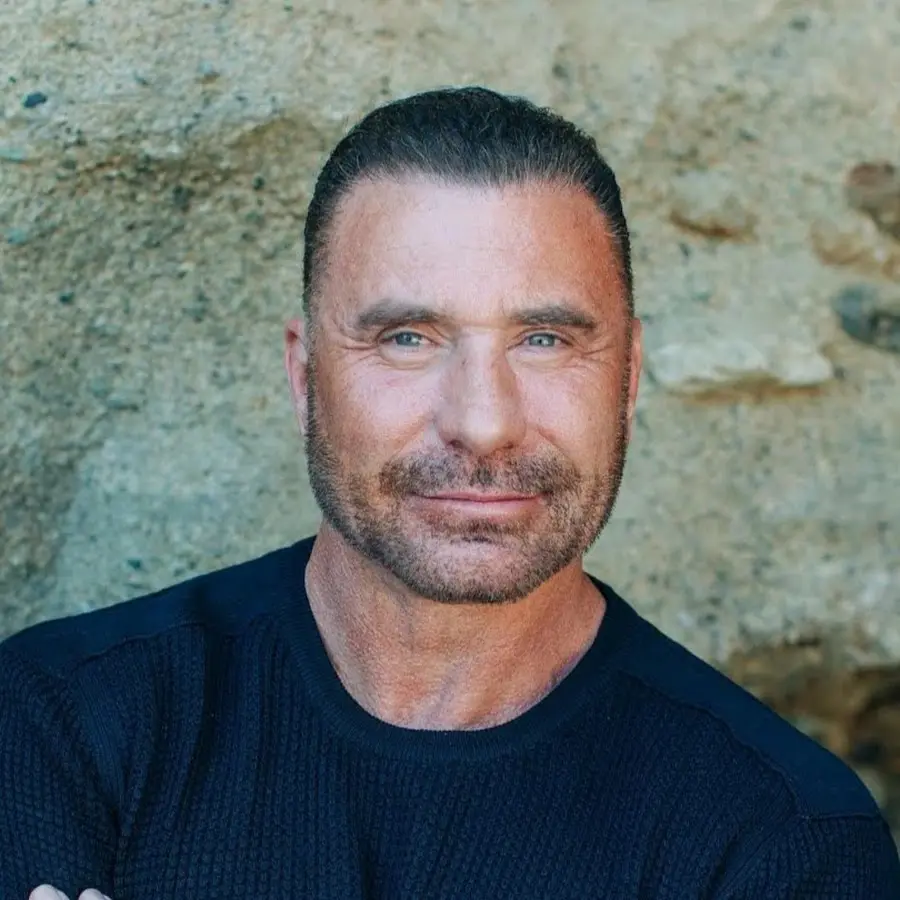
Andy Frisella Breaks Down the Mindset That Creates Elite Performers!
01:00:55Published May 21, 2026
What if the version of you that you’re chasing is still playing way too small? In this conversation with Andy Frisella, we went deep on something most people don’t want to hear but desperately need to understand. Success is not something you arrive at. It is something you chase for the rest of your life. Andy broke down why he genuinely does not feel like he has made it, even after building multiple massive companies, and why that mindset is exactly what keeps him growing. For him, success is the pursuit of your true potential, knowing you will never fully reach it, but choosing to go all in anyway. We talked about what it really takes to win at the highest level, and I can tell you this is not the version of entrepreneurship you see on social media. There is nothing casual about winning. Andy and I both agreed that intensity is not optional. It is required. Most people underestimate the level of urgency and commitment needed to build something meaningful. If you are not willing to bring everything you have, someone else will, and they will pass you. Andy also shared one of the most powerful frameworks I have heard in a long time. He calls it a zero options mentality. Even when you have success, even when you have resources, you operate like you have no backup plan. That mindset forces you to stay sharp, stay hungry, and keep executing. It is not about fear. It is about discipline and ownership. And when you combine that with real mental toughness, you create separation that most people will never close. We also went deep on where the world is going, especially with AI and business. Andy believes the winners will be the ones who use AI to become more efficient behind the scenes, while doubling down on human connection out front. Relationships, culture, and leadership still matter. In fact, they matter more than ever. Ethical entrepreneurs who build great people and great cultures are the ones who will shape the future. This episode is a real look behind the curtain. No hype. No shortcuts. Just the truth about what it takes to build something great, sustain it, and continue to evolve long after most people would have settled.
As you push down the path of winning and, and success, you're gaining new potential, you're gaining new, new skills, you're learning, you're becoming more effective.
So when I think of like the sacrifice that all these men have made over the centuries of America, I think that we have a duty to honor those sacrifices with what we do with that freedom
and what we do with that ability and skill.
I think people underestimate the level of intensity you have to bring to making something great happen in your life.
No doubt.
I think it's, I think it's one of the biggest things.
I think it's one of the biggest problems in the entrepreneurial landscape right now.
I think you have to integrate AI into your backend systems to make them function as quickly as possible, to eliminate the labor cost, but also increase the efficiencies.
Quicker, faster, instant things.
And then equip your forward-facing human force to be very good with those tools.
Mm-hmm.
And that's where I think the companies that are gonna win are, are gonna win big.
That if we're going to fix this country and fix what's going on, I believe it comes from the entrepreneurs and ethical entrepreneurs, ethical entrepreneurs that set ethical culture
around the things that matter inside their business.
The employees take that culture home into their households and spreads through their community.
So if you have excellent culture inside of your business, you're in your— you're by default correcting culture inside the world, right?
You can't do that with fucking robots.
Andy, that's being said nowhere.
Yeah.
Welcome back to the show, everybody.
So today is something that you all ask for about once a year, and I'm super blessed to be able to do it.
I'm sitting in what is the most impressive room I've ever sat in in my life, and I'm fortunate enough that I've been in this room many, many times.
Um, the greatest car collection I've ever seen in my life sits in this room, but also like the greatest dude sits in here with me every time.
So Usually this guy and I sit in here, smoke some cigars, and talk about life and business.
And we decided today we're going to record it so you guys can listen in.
Yeah.
And this is one of my great friends in my life.
He's like a, a young brother to me.
I've learned so much from him.
I'm very proud of him.
And, uh, he makes a difference in the world, you guys.
He's making a huge difference in the world.
He speaks his mind, which I know he'll do again today.
And we're just going to talk about business because you guys all want to lean in and know what we talk about every single day.
He's my partner in the Arte Syndicate, which we have the greatest business coaching program together in the world.
He's the founder First Form.
He's the founder of Form Energy, and not all of you might know this, you know, he also is the founder of 75 Hard, which has been the greatest mental toughness movement on planet Earth
the last 5 to 7 years.
So his name is Andy Frisella.
Andy, welcome back to the show.
Thank you, bro.
It's awesome to have you here, man.
Great to have you.
Yeah, I appreciate all the kind words, and you know they're reciprocated.
Thank you, brother.
I know that.
So it's interesting, we're sitting in this room.
I won't give you the number, everybody, of what the car collection's worth.
It's a former president's home you live in.
It's a pretty darn nice place.
And every time I come here, I get my vision stretched a bit.
I think people would be surprised about our private conversations.
And so you're founded, you know, right now the fastest growing energy drink in the world, the biggest movement online the last 5 years, like I said.
And FirstForm is this behemoth in the industry and well and growing, yet you don't feel successful.
And it's actually sincere.
I mean, I don't think you think you're broke, but in your own mind— and I think this is a recipe that people need to learn— like, you truly, as we sit here, don't feel like you've made
it.
Why is that, and what's that mindset like?
You know, how I look at it is a little bit different than I think most people look at it.
You know, I'm, I'm 46 now, um,
done, done a few things, right?
But that's maybe half my life or half my potential, right?
And I feel like a lot of people, they get to a certain level and they start to feel like they're there And I've just seen so many people get to that point and lose it,
that, that I just, I just stopped looking at it the way that most people look at it.
I look at it differently.
You know, when I define what I think success is, I believe it's the commitment to one's true potential, to the pursuit of one's true potential.
Okay.
So
what that means to me is that as you push down the path of winning and success, you're gaining new potential, you're gaining new, new skills, you're learning, you're becoming more effective.
And if you were to just stop, then you're leaving all this potential on the table.
And so if we're talking about like what success really is,
it evolves over time.
You know, what success was to me on the first day of my entrepreneurial journey is not what it is now, and that's not what it's going to be in 5 years from now.
And so I just believe that
when you think about it the way that I think about it
and you think about like pursuing your own true potential, what that means is, is that as you go down the path, your potential is expanding on the back end.
Really good, right?
Because you've learned new skills, you've had new experiences, you've made new relationships, you have different resources.
And, um, what that ultimately means, unfortunately, is that, you know, you could never hit your true potential, right?
Because eventually you're limited by time, right?
We're gonna die.
So, uh,
how I define success is just simply pursuing that, knowing that you're always going to leave things on the table, but you have a duty
to become the best version of yourself
if not just for yourself and your family, for everybody else to see.
You always say that word duty.
Why is that the word you use instead of, you know, like commitment or whatever?
You call it like a— like it's something deeper than that to you.
Yeah, I think,
I think it is a duty.
You know, when I think of like— meaning like because you've been so blessed to live in this country or whatever it is that you— I look at it like this, okay?
For it does have something to do with our country.
But
for you, when we think about like what creates a stable functioning,
high functioning civilization, it comes from ambitious men.
It comes from ambitious people.
It comes from people who have big dreams, big goals, who are willing to go down that path with no guarantee to create something special, something great.
That inspires other people to do the same.
And eventually when you get, you know, you can't understand this when you don't have anything, you know, when you're first starting out, you're like, man, I'm eating ramen.
It's hard to think about other people when you're eating ramen.
That's true.
Right.
But as you start to win and as you start to grow and as you start to, you know, accumulate things and, you know, all these things that people think success is, you start to realize
that there's not a whole lot of fulfillment in those things.
You can enjoy them, but it's not really a fulfilling thing, so to speak.
And,
you know, for me, my dad's father, they never met.
So my dad's dad was killed.
He stormed Normandy and then he was killed 6 months later in World War II.
And my grandma was pregnant with my dad.
So my dad never even met his dad and he died when he was like 20 years old.
So when I think of like
the sacrifice that all these men have made
over the centuries of America,
I think
that we have a duty to honor those sacrifices with what we do with that freedom and what we do with that ability and skill.
And so that's part of it.
Okay.
And then the other part is, you know, people are so shy and so ashamed in a way of being successful that they keep it to themselves.
Yeah.
And that doesn't do anything good for anybody else because the truth of the matter is, is that if we want a high-functioning, high-drive, high-character, driven, ambitious, successful
America with the American dream, if we want that, we have to understand that at some point we're responsible for inspiring that example in the younger generations.
So when I— if I were to just stop and say, oh, here I am, I'm a rich guy,
that's, that's, you know, that probably inspires some people, right?
They want to get some stuff.
But when they can observe someone who they deem to be successful, continuing to go hard, continuing to try and push, continuing to try and elevate, I think that that's much a much better
example to set.
And so, and then so those are two parts.
And the third part is, dude, like, I'm just wired for it, bro.
Yeah, you know what I mean?
Like, uh, I enjoy it.
I enjoy, um, inspiring young people.
I love when I drive one of my cars to the gas station, the little dudes are like, oh man, it's so cool.
Yeah, like, I love that.
Yeah, so I know you do it.
I think it's— by the way, I was thinking about it.
It's probably, if we go back, it's been a while now, it's probably why we founded Baratay Syndicate.
I mean, we both wanted to pay it forward.
We both wanted to grab people back at a stage we were at at one time and bring them forward.
But I've been with you— I want everybody to go back a little bit.
I've been with you down that dirt road that you grew up on.
Yeah.
How far away from here is that?
10 minutes.
10 minutes away.
Yeah.
And I've been down there.
I looked at the home you grew up in.
We've actually met one of your neighbors that remembered you when you were a little boy.
Yeah.
And So I look at that guy, I know that guy, right?
I didn't know him then, but I've taken this journey with you.
And so there's the you now that's like, look, I'm going to pay it forward, I'm successful, I want to help other generation, I want to touch my potential.
It's a never-ending thing.
But if we went back when you first started,
did you—
was there like a dream and a vision like we'd be sitting in a room with, I don't know, $70 million car collection or whatever that's sitting around here and smoking cigars and, you
know, having the life that you live, or were you just like, look, man, I'd like to get my head above water and be financially independent?
Or was there always this part of you in the background?
I want you to answer this because there's— most of the people listening to us are there where you and I have been, back in the very beginning, kind of a little bit of a dream, trying
to get their life off the ground.
What were you thinking then?
Were you thinking all this stuff then, or were you like, just get ahead above water?
You know,
it's, it's In the beginning, dude, it was, it was, I just wanted to make a lot of money.
Same here, by the way.
That's the honest answer.
Yeah, same here.
I just wanted to make a lot of money.
I thought, you know, I was really into cars growing up.
Um, I always had Hot Wheels and Micro Machines and remote control cars, and I was obsessed with cars.
And I understood very early, because my dad planted in my mind, that if I was going to ever enjoy that for real, I'd have to make a lot of money.
Yeah.
So that started for me when I was pretty young, when I was like probably 8 or 9 years old.
You know, me and my dad were— my dad, my brother, and I were at a gas station.
There was a guy who had a white Lamborghini Countach.
This is in the '80s.
And I thought it was the coolest thing I'd ever seen.
And my dad was always really good about not shitting on other people's success.
And making it a lesson.
And I think that's hard for a guy to do, right?
Like a guy pulls up in a car that costs as much as your house and you're able to look at him and say, hey son, that guy's doing something right.
I don't know what it is.
My dad was always good about that.
And I think a lot of parents really fail at that.
A lot of parents, when they see other people's success, they allow their own insecurity and their own jealousy to stop them from passing a valuable lesson onto their children.
Uh, but I got lucky in that way, and I use the term luck very selectively.
But, you know, you can't really help who your parents are.
Yep.
And, um,
so I— my dad's like, yeah, man, that car is awesome, but guess what?
You're gonna have to make a lot of money to do that.
So that kind of started— that started me down the road of entrepreneurship, you know.
Um, when I was a little kid, I was always trying to figure out ways to, to hustle, you know.
I had a little baseball card like hustle going on in my dad's garage.
Yeah, I sold, uh, you know, anytime in school there was like a contest to like sell sausage or whatever the stuff was, you know, I go door to door and sell the shit out of it.
Yep.
And so that just started.
That's where it started, man.
And all through school, I was never really a good student because I always knew that I wanted to like do more than what I wanted to do wasn't going to be taught in school.
You knew that, right?
Yeah.
And so, uh, And that's kind of where it started, man.
Where do you think you're— I've always wanted to ask you this because I know you obviously, you know, really well now.
What was the— if someone's listening to this, and by the way, is it the same skill now?
What did you get good at that got you momentum and progress?
Like, what was the thing that you— was it selling?
Was it persuasion?
And then do you think that same skill, whatever it was, is required now in this economy with the advent of AI, which we'll talk about in a moment.
Like, what did you get good at?
Well, naturally, dude, I'm pretty introverted.
Um, I'm not a people person by nature, and that was a skill that I had to learn that became probably my best skill.
I'm able to communicate with people, um, no matter if they're, you know, guys that have grease and dirt all over them, or if they're, you know, a billionaire walking through the room,
I'm able to find common ground very quickly and be able to, you know, connect with people.
And I did that intentionally.
You know, I used to play a game, um, with myself to train myself to be able to do that because I was scared to talk to people, like really scared to talk to people.
Uh, even when I was like going door to door when I was a kid, I was terrified of doing it.
And I realized that for me to become effective, I have to be great with people.
And that's something that I think almost all successful people have in common.
Now, there's outliers to that.
Yeah.
But
having great strong people skills is super, super, super important.
And dude, I used to play this little game.
I used to go to the local grocery store here and I would make myself talk to 3 people Wow.
A real conversation, 3 random strangers, and then I could go home.
So I'd walk in cold and I would make myself do 3 conversations and I would go home.
I did that for years, for years, so that I could get comfortable, like real comfortable, you know, talking to people.
And then that skill set, you know, kind of led to all different great things in my life, you know.
Great relationships, great partners, great networks just from, you know, having that skill set.
Other than that, dude, like, real talk, I don't think I'm really that great at anything.
I think I'm good.
I think anybody who has done what I've done for 27 years would be as good as I am.
I come out— it's one of the points.
Very rarely— I very much disagree with that latter.
I'm going to tell you a couple of things I think you're great at, and I want you to talk about them and don't be humble.
Okay.
So one thing you are really great at is vision.
You see things before they happen.
You also did not create all of this in your life without a really clear vision and dream.
Okay, so that is something I think a lot of times when we're good at something, we just take for granted that we're good at it.
That could be— you're, you're— go back there.
You're broke.
Some of you probably know this.
We're not going to cover all the stories we've covered before, but this guy was an overnight success in a decade.
Yeah, okay.
It took him a decade to make any money.
I mean, like, even any money where he could really eat consistently on that dime without supplementing his income.
Okay, so during that time, you probably wanted to quit a million times, probably almost did a million times, like a lot of people listening.
You are a visionary.
To this day, of all of my friends, I think you're the friend that stretches my vision the most.
He's always sending me, hey bro, look at this yacht.
And it's not all material things.
He'll send me photos sometimes, hey man, Don't tell anybody else this, but, you know, we just, you know, the company just did this for this cause or whatever it is.
He'll never tell you guys, but he'll share with me.
You're extremely visionary person, and I think it's one of my skills too.
I don't even know where it comes from because I didn't grow up with any of that, but I always like, I'm always seeing what the future could look like.
I don't know that I always believe I'll get it, but don't you agree?
Like, let's be real, and we'll talk about another skill I think you have in a minute, but that's a real thing with you.
Did you have that back sleeping on the mattress then?
This episode is brought to you by Ro Nutrition.
I'm extremely selective about what I put in my body.
I don't take a lot of supplements, but the ones I do take, I want to know they're actually doing the stuff they're designed to do.
That's why I trust Ro.
Their entire approach is built around liposomal delivery, which is designed to support absorption so the nutrients actually get where your body can use them.
It's been a part of my daily routine now for quite a while, and I got to tell you, I take their NAD+ for cellular energy.
Their creatine strength and mental output helps me.
And their glutathione is my favorite, by the way.
I don't know, I just feel good on it.
It supports your antioxidants and your recovery systems.
I like that Ro is third-party tested, by the way.
I know exactly what I'm putting in my body.
And when you're running businesses, you're leading a team, you're traveling, you're training, making decisions all the time, your energy and focus have to keep up.
And Ro is how I do it.
It's simple, it fits into my routine, and it's supporting the way my bodily actually was designed to thrive.
So Go to rownutrition.com and use code MYLET for 20% off sitewide.
That's code MYLET for 20% off sitewide at rownutrition.com.
I think number one skill in business and life is communication.
And so if your team's communication is messy, customers feel it.
Big huge problem in business today: missed messages, dropped threads, and here's a biggie— slow replies.
And that's why today's episode is brought to you by Qo.
They're spelled Q-U-O.
I think you should lean in and listen this.
It's a business communication system built so you never miss a call.
Your entire team can handle calls and texts from one shared number.
So no more missed messages or dropped conversations 24/7.
Replies are faster, customers actually feel taken care of, listened to, heard, and they feel like they're building and dealing with a big company, even when they might be a startup
or a small one.
QO is the number one rated business phone system on G2 with over 3,000 reviews.
Can even qualify leads or respond after hours so your business stays open even when you're off.
Seriously, go check out Quo.
Money's on the line.
Always say hello with Quo.
Try Quo for free plus 20% off your first 6 months when you go to quo.com/mylet.
That's quo.com/mylet.
I had dreams.
I had dream like what, like maybe this would be cool, this is what I would like.
But that's why I also believe that there's a lot of truth to like metaphysical law of attraction and those things as well.
But I actually think that the vision comes from experience, if I'm being honest.
You know, when you see things,
when you've, when you've been in business for so long and you've seen things play out over and over and over again, you get really good at seeing past the first or second decision that's
going to be made off of the decision that you're making now.
Right.
I'm going to choose this now.
And then these two things could happen.
I think this thing's going to happen and then these two things could happen.
I think that thing's going to happen.
So it's more of like a calculated
regurgitation of things that you've already seen.
And so I don't know that it's a gift more than it is just being around for a long time and watching things unfold.
I don't know if it's a gift, but it's a skill.
It's definitely a skill.
It's a skill because I think when you hear giftedness, I think people think, well, maybe that he just got given.
Yeah.
So you make a really good point.
Yeah.
Here's the other thing that I think is like, I'm trying to find things on the show.
Most people do only look at that first decision.
You're right, you know what I'm saying?
Yeah, they make that decision and they don't have the capacity to look 1, 2, or 3 steps down the line.
And I think that's a big handicap for most business owners, if I'm being honest.
Well, we'll talk about a couple of the ones you've made too.
Here's another thing, like, I always try to find things on the show when you and I are together that, like, you and I talk about but, like, I don't ever really hear discussed elsewhere
that I'm comfortable putting on.
Yeah, yeah.
And here's one of them.
You and I, if people— I think people see it with you more than they would me.
But you run hot.
And what I mean by that is not just like a temper.
I don't mean that.
I mean there's a level of intensity to you that I think even the guys that came with me here today, shaking your hand, meeting you, there's a frequency, like there's a level of intensity.
I'd like to think I have that as well.
And I think that it's one of the secret sauces and elements of successful people.
They almost will things to happen.
I know it's God's blessing, but there's a level— I think people underestimate the level of intensity you have to bring to making something great happen in your life.
No doubt.
I think it's, I think it's one of the biggest things.
I think it's one of the biggest problems in the entrepreneurial landscape right now.
Entrepreneurship has become like a, a thing that is presented like it's for everybody.
Okay?
It's not for everybody.
And it doesn't matter.
I don't care what all the other guys say.
None of them have built what I built.
That's just the truth.
And I'm just telling you, dude, it's not for everyone because you're, you're trading a lot of things for other things and it takes everything.
And I think one of the things that I did, I was always that way.
Yep.
I was always that way.
Like when I was in, when I was young in sports, when I was in high school in sports, when I got through college, every— I was always ultra competitive and ultra urgent about winning.
Now, I might not be urgent about everything, but I always wanted to win.
And, um, I think over the course of my journey, that
intensity increased
to the point where I could almost not control it.
And then once I matured a little bit, I was able to bring it back in line and know when it's appropriate.
Right.
So it's like this awesome weapon that you have, but you got to know how to use it, you know?
But I feel like this is one of my roles in your life.
Absolutely.
That you met.
No, absolutely, bro.
Yeah.
If I didn't have you as a, as one of my brothers, dude, that I could call and talk to, I'd go fucking crazy.
That's the truth.
Thank you.
Because I don't have that many people outside of like my own brother and my own business partners.
That really understand that, right?
You know what I mean?
Yeah.
So, and you met me, by the way, after I— you're just so brilliant the way you just articulate— you met me after I made that discovery, meaning I've got to deploy this intensity strategically.
That's where I learned it from, right?
Okay.
From you.
Okay.
Like, when you and I met, I was just running fucking wild, bro, right?
Like, I was bull in a china shop.
I just let my energy and my urgency and everything just I just nuked everything.
You did.
And, uh, and by the way, you were already very successful.
Yeah, but, but I mean, dude, that's not a fun way to live, right?
Because you're always pissed off.
And there's a cap.
Yeah, because you build things and obliterate them.
You build people and hurt them.
You— it's because I've done it, right?
Yeah.
And I, I regret some of that.
But I do too.
But this is what I want people to understand that want to be entrepreneurs, or I think just want to be a professional athlete, or want to be a great whatever, great at anything.
You— I'd rather have somebody that I've got to dial back.
Yes.
Than someone I got to dial up.
You've got to bring this pace and this urgency and this intensity to your mission that I think people underestimate because of social media.
Yeah, everyone looks like they're having a good time.
Yeah, you can have complete balance.
You can, you know, ski in the Alps of Switzerland and then at the same time be closing deals on your laptop and whatever the heck this stuff's been pre— and I I just have not had that
experience, nor of the real people like you that I know that are successful.
These folks run hot.
They're intense people.
Doesn't mean they're loud or, uh, they have deep voices like you.
That's not what I'm talking about, because plenty of these people are women, right?
But there's a thing in them.
There's this dog in them, almost like— you know what I mean by that?
They got that dog in them.
They got that— it's like a fire you have to control rather than try to ignite.
Yeah, I look, I think it's required.
Okay.
I don't know anybody now.
I know a lot of people who sell, maybe they sell digital products or something kind of casually and they got a little more freedom and that's okay because, you know, maybe that's all
they want.
Maybe they just want a little bit of money to go travel the world and do those things.
Sure.
I'm not talking about that.
I'm talking about actual entrepreneurship, the creation of things that are an involvement of things that already exist or original thoughts that you take from your brain and put into
action that actually create a company.
That employs people, contributes to culture, society, community.
That's a different thing than selling, you know, how to do a widget or whatever, right?
So, but to build real things, I'm not taking anything away from that.
Sure, you make, you make half a million bucks or a million bucks a year, tremendous, travel the world.
Cool, dude.
Awesome.
Yep.
I'm sure that's most people's dream, but that's not my dream.
And, um, when I think of like
the require—
people have to— there's nothing casual about winning.
There you go.
Absolutely nothing casual about winning.
You are competing against other people who are willing to give all of everything they have at all times.
The higher that you go, it gets more competitive.
So if you don't have that urgency and you get in that place of comfort where, you know, you're cruising out on Thursday afternoon and coming back on Tuesday, bro, you're going to lose.
That's just reality.
It may not feel like you're going to lose.
You may not feel like you're losing, but you're going to eventually find out that other people that are doing the same thing as you are working all that time that you're out doing whatever
it is you're doing, and they're going to pass you.
And that's reality.
Yeah.
And sometimes by the time they pass you, it's too late because they've evolved too much.
You're too far behind.
And I've seen— I've seen— and I wonder what you think about this, but I have seen more people fail in life that have won once.
Gosh.
Than people who never win, if I'm being honest, because they get that first win and they think it's always going to be there.
Yeah.
And it's just not.
It's— I have more friends that used to be successful than currently are.
Yeah.
That used to have a little bit of money than currently do.
That used to be— bro, I don't want to be that.
Well, well, I'm being real, and I don't know that this is even healthy.
By the way, when I say healthy, to live like you and I live sometimes— no, it's not healthy.
It's not.
Listen, it's okay not to be this way.
Listen, just don't say you want to dominate the business.
You don't have to.
Look, man, I'm not saying that you have to be that way, right?
I'm not saying— I'm saying if you want to build real things and compete at the highest level, then you have to be that way.
Yeah.
And that's what I want to do.
And so You know, that intensity that I always had, and then combined with the urgency of knowing that you're like one day from going out of business, you know, the first 15 years you're
in it,
that does something to people.
Yeah.
You know, that, that, that rewires your nervous system, man.
It does rewire.
Yeah.
And, uh, and then, you know, when I met you, I, I, I was doing very well.
Um,
not comparable to what I'm doing now, but it's doing good.
And
I think I remember telling you how much I made that first time.
It wasn't very much.
I remember.
Yeah.
Um,
it was a lot, but it wasn't very much compared to now.
But the point is, is that, you know, uh,
what I realized from, from having you in my life, which I'm very grateful for, and I'm not an expert at this by any means still because there's still moments where the old Andy appears.
Yeah.
Um, but it is— I realized that this is, this is a tool in my tool belt, and I needed to learn how to use it properly.
Yeah.
And that made me a much more effective entrepreneur and much better leader.
Much better leader.
He's one of the great— he is truly, you guys, he's being very nice to me— he is one of the great American entrepreneurs, and he's building multiple multi-billion dollar companies at
the same time.
And it's been unbelievable to watch as he's matured and as he's grown and as he deploys this intensity.
I wonder, and answer this for you, not my way, and I know you will anyway because it's you, but do you feel like you— that thing where people have the first win and stop?
I've always watched that, like, and this is what happens in my head.
I go, aren't you afraid you're gonna lose it?
Like, I think to some extent, maybe this isn't healthy either, I've developed a lot of self-confidence, but I'm still I play scared.
I think that— and maybe that even sounds like a weakness.
No, no, it doesn't.
I get it totally.
Like, I show up at work every single day.
I'm at the office 7 days a week at this.
Anybody that works for me knows that I'm there 7 days a week.
I show up there every day
thinking we're going to go out of business, even if it's not true.
Wow.
It's, it's a mentality that I used to try and get away from.
Yeah.
That now I embrace and really appreciate that I have.
I call it zero options mentality.
All right, so like in the beginning when you're totally at, you know, where we talked about most people are at the beginning of their journey, you don't have an option, dude.
Like, it's either go or accept what you have, understanding that what you have is going to get worse, right?
Okay, because as you get older, you're going to be less capable, you're going to be less hireable, you're going to be less employable, you're quality of life is going to lower as you
get older.
And if that's what you want to do, cool.
That's just not what I want to do.
And, um, as you grow and you start to have wins and make success, you know, it's easy to have that mentality of I have to go no matter what when you don't have anything.
But when you start getting resources and money and success and wealth, how do you operate at that same intensity?
Well, you have to trick yourself into believing that there's no other option.
Yeah.
You know, and like, for me, the story I tell myself, even though it completely is— I know it's not true.
Okay, this is going to sound crazy, but I tell myself, I'm like, you don't have a degree.
All right, you don't even need degrees anymore.
But I tell myself this because that's the area I come from.
You don't have a degree.
If you lose, you're going to be digging ditches.
You don't have any skills.
Like, I'm— I pretend I'm the same old dude right from the beginning.
Yep.
And, uh, and that's what keeps the urgency alive, right?
Even though I know it's logically not true.
Like, if I were to, if I were to somehow
lose everything,
I mean, I have enough skills where I could get it back and enough relationships I'd get it back like pretty quick, right?
You know, um, but you think that way, like, and I do too.
Sometimes I wonder if it's healthy or not, but it's kept me— I mean, I, you and I both worked today.
We're sitting here having a nice time.
We look great in your place, but we both have worked today, you know, and and it's a Saturday when we're recording this, everybody, right?
And the other reason is, is that— and maybe this is just a mindset thing, and then we'll shift to some AI stuff— but like, for me, I'm a competitor.
I tried to play professional baseball.
I wasn't good enough.
I say I got injured, but I just wasn't good enough, right?
You were a great athlete too.
Your brother wasn't good enough.
Your brother was really good.
Yeah.
And he had an injury.
But, but this is my sport.
Yeah.
Yes, this is my sport.
So, um, and it's also a form of expression for both of us.
That's why we do Arete.
It's my— I don't play music very well.
I can't sing.
This is like my art form and my sport simultaneously.
Yeah, I don't love every day of it, but left alone, if I didn't do this, I'd have no form of expression because I can't sing, I don't dance, like, I don't do any of that.
And I'm not going to be a professional.
I used to think I'd be on the Senior Tour playing golf.
I can't break 80 anymore.
So like, this is my sport and my art at the same time, and that's why it doesn't usually feel just like work to me.
The same for you?
Yeah, 100%.
I grew up wanting to play in NFL.
You know, my brother played pro baseball.
He would have actually been— yeah, Sal would have— Sal would have been a 15-year pro MLB guy had he not had a compound fracture, like, in the game.
Um, so he grew up in that world.
And the one thing I'm grateful for, because,
you know, when you don't end up achieving those dreams at least for me, you know, for the first 10 years when I was like suffering in business,
I had nightmares of— and when they're dreams, but, but they're more like nightmares of playing football.
Like I would have these dreams of playing football and then I would wake up like with this regret.
And it's because we weren't successful.
We weren't making any money.
Things weren't working out, you know.
And then when we started winning, it trans— I started realizing what you're saying.
I started realizing, whoa, this is actually a great thing because now I get to, I get to play the game till I'm 70.
Yes.
80.
Yes.
Right.
Like, it's the best game in the world because it's not like baseball or football where you might get 6, 7, 8, you know, years.
If you're Tom Brady, you get 20.
Right?
But with entrepreneurship, it's, it's a lifetime.
And what's cool about it too is that, you know, in sports these dudes get a little older and they start going downhill.
Well, in business, you get a little older, you get a lot better.
It's true.
And so it's, uh, it's an exciting game and I enjoy it.
And that's how I look at it.
That's so funny that you say that about the dream.
I'll tell you something, I don't know if I ever told you this before.
So one of the hardest things you'll ever do in your life is start a business.
Let's just take this podcast for example.
When I got started, I had no idea what what I was doing.
It was completely intimidating.
I had no idea what I was doing, and I felt lonely.
It seemed like I had to figure it out on my own until I found Shopify.
Why?
Because Shopify is a commerce platform behind millions of businesses around the world.
Listen to this: 10% of all e-commerce in the US, from household names like the Ed Mylett Show to a beginning business, is from Shopify.
Whether you need a storefront, copywriting, marketing, all of this stuff can happen when you start with your own design studio, hundreds of ready-to-use templates that Shopify helps
you build a beautiful online store that matches your brand style.
Shopify is packed with all kinds of AI tools like what I've never seen before.
Start your business today with the industry's best business partner, Shopify, and start hearing—
sign up for your $1 per month trial today at shopify.com/mylet.
Go to shopify.com/mylet.
That's shopify.com/mylet.
Mylet.com.
If you run a business, time's money.
And here's the truth: you're probably wasting time on things that aren't making you money.
And if you run a business, you know it's not what you do but how you spend the time doing it.
Nothing wastes time faster than messy account system payable issues.
And that's why you need Intuit QuickBooks Bill Pay.
It's a game changer.
QuickBooks Bill Pay automates your accounts payable into QuickBooks so you're not stuck doing admin all day.
With QuickBooks Bill Pay, all your bills, vendors, payments, info, even 1099s live in one clean dashboard, actually, so everything makes sense to you.
You can instantly see what's due, control who needs to approve it, and how it hits your cash flow.
Vendors can actually add in there on their own their own payment details, so you don't have to be chasing them down.
And you choose how and when money goes out, so you stay in control.
So start paying your bills the smart way, not the hard way.
Learn at quickbooks.com/billpay.
Again, that's quickbooks.com/billpay.
Terms apply.
Money movement services are provided by Intuit Payments Inc., licensed as a money transmitter by the New York State Department of Financial Services.
I still about once a year have this dream, but for a long time I had it like once a month.
And it's— I'm playing baseball still, and I know why.
I'm going to tell everybody this.
It's like a confession.
I don't think I've told you this before.
I feel like when I played, I gave Everything I had,
but I left a little bit in reserve.
Oh, yeah.
And I think the reason I did is that maybe if I didn't make it, I'd have an excuse.
I'm not sure.
Subconsciously.
Yeah.
But even all you business people, just evaluate this.
Do you leave anything in the tank?
Because I did a little bit.
Like, I could have— it looked like I was working my hardest, but I know I could have given more to the game than I gave.
And let me tell you what the dream is.
I had this dream where I'm being announced to play.
I'm outside the stadium.
I'm in my uniform.
And I can hear them, leading off, playing center field, number 8, Eddie Mylett.
And I can't get in the stadium.
They won't let me in.
I can't.
And I'm running up to the security there like, no, I'm the center fielder.
They're like, look, man, I don't have any ID for you.
You can't get in here.
And I'm not open the other door and the fence is locked.
They won't let me back in the stadium again.
I'm like, no.
And they're like, and it's second base.
And I'm like, no, I'm the center fielder.
Dude, you can't get back in.
And I've had this dream.
I still have it at least once a year.
And I think part of it is like, I think it's a healthy thing because I don't want to ever look back at this part of my life, which is the rest of it, at the end of it, go, let me back
in.
Yeah, I don't want to have any regrets at this point in my life.
I don't like, let me back, please.
I'm, I'm no, bro, you missed it.
It's over.
Yeah, I don't want to have that feeling.
So the field is like my life now, and it's just so it's interesting that you had a dream like, dude, you know, I think a lot of that comes from I've, I've talked to a lot of people
that have similar feelings of what you're— not the same dream, but like a similar type outlook.
And I think that comes from two things.
What I've been able to determine is there's, there's two different exact
avatars of people that, that this comes from.
One is people who didn't make it in their sport, but two is people who had an actual near-death experience.
Interesting.
Okay.
I've had both.
So
when you realize, when you have this
awareness that your life can end like literally in a second,
it's hard not to be urgent, dude.
And I think a lot of the truth is that a lot of people haven't really faced real hardship to develop the urgency.
They look at people like me or people that are like you and they're like, this guy's fucking insane.
Well, bro, when you get stabbed in the face and you almost fucking die on the street for real, you wake up with a different understanding that it can go away like that, you know?
And
that changed me, that whole thing, you know?
Like, I was—
I just don't take it for granted, dude.
I just don't.
You never told me that that was the effect the stabbing had on you.
Oh yeah, yeah.
I woke up the next day and I was like, fuck.
That could be.
I said earlier that you see things pretty well.
I've only asked a couple people this on the show just because I don't value their opinion.
But with you, I'll be honest with you guys, like, there's been so many things this dude has told me the last 7 or 8 years, whether it be in the world or geopolitically or business or
what he was going to do in some of his businesses, and then they've happened.
They don't always happen in the time frame.
No, sometimes they're later, sometimes they're earlier.
Everything always takes longer for me.
But man, it's happened, right?
And so AI is something you're really getting deeply involved with now.
A year ago when we're talking about, you're like, I don't know anything about that.
At some point you went, that's not going to be good enough as a business leader.
That's right.
I need to know about this.
That's right.
I need to educate myself.
It'd be like some guy back in the day going, I don't know about cell phones.
Like, you got to know, right?
Yeah.
So what's the picture look like for you?
Like, if someone's listening, they're an entrepreneur, and they go, Andy, what about AI, like, just in general, as a broad stroke question, what advice would you give to people who—
I don't know, they're maybe they're concerned, maybe they're excited?
Well, I definitely think you should learn it.
I mean, I think that's where you start, right?
Um, I, I missed— when I was 19, 20, 21 years old, that's when the internet really started booming, and I didn't have any resources, so I missed that opportunity.
Uh, when social media came around You know, I was 3 or 4 years late to that, still did okay, but, but, you know, I wasn't thinking of it in terms of business, you know.
And then when AI comes around, I think it's the— I think it's the biggest of those 3 revolutions that we've had happen.
Um, so I think it's very important for everybody to understand what's going on and, and to know a little bit about AI.
You don't have to be an expert, but you need to know how it works, what, what the biases are, what it can do, what it can't do.
How it's made, those kind of things.
Um,
but as far as like what I think is happening, is that what we're asking?
Yeah.
Um,
oh man,
I think all administrative jobs that basically bring no value to a business are going to be eliminated.
Um,
AI is very good at managing tasks and doing things that you would have to hire what we would call in entrepreneurship, a body, right?
Which is basically a human with very little strategic value to the business to just type shit.
Those people are done.
You're done.
If that's you, you're done.
You just don't know it yet.
Um, are all businesses done?
No, absolutely not.
People still want to— and I think the sweet spot here, because we're seeing all different opinions, right?
We see— we already saw, um, we've seen a number of companies lay off thousands of people and then, uh, and then realize that AI is not good enough, and then they try to hire the people
back, and it really put them in a bind.
That's happened a bunch of times.
I don't— it doesn't get publicized because none of the bad shit does.
Um,
but I actually believe that it's going to be different than what people think.
I think a lot of people think it's just going to run everything and it's going to be— and, and, dude, that's what people think when they're thinking like the lazy way.
Right.
I could get a cloud bot and I could do— it could make me millions of dollars and it broke.
But
can it?
Right.
Can it really?
Have we seen it yet?
We haven't seen it yet.
Right.
So
there's a, there's a lot of hustle around it.
I personally believe, and this is where I think businesses should position themselves on AI.
I think you have to integrate AI into your backend systems to make them function as quickly as possible.
To eliminate and to eliminate the labor costs, but also increase the efficiencies quicker, faster, instant, you know, things.
And then
equip your forward-facing human force to be very good with those tools.
And that's where I think the companies that are going to win are going to win big.
I think if you think that you're going to automate all of your shit, you're probably going to lose.
And I think that for a number of reasons.
Very good.
Um, the main reason being is that we're in a cultural position right now where people are not wanting to spend more time with technology.
How many of you guys want to spend more time on social media?
Honestly, probably zero.
Okay, so people are becoming disenfranchised with how— and they're becoming aware of how much technology is stealing from us living our real lives.
If that's the case, which I know it is because I watch, I see how we do business,
then we're really in a situation where people are— there's a vacuum for human-to-human contact right now, right?
There's a vacuum for great relationships.
There's a vacuum for connection that cannot be filled with AI.
So if you're an employee or an entrepreneur or an operator, you know, a founder, CEO,
Understanding AI and seeing it as a weapon versus seeing it as an all solution is the way you want to look at it.
And you want to equip your soldiers, your team with the best weapons.
And that's what I think.
And that's how I'm positioning my companies.
That's what I was going to say.
Okay.
We're, I mean, none of this shit is just like, I'm betting my life on it.
So we are allowing our systems on the backend to become more efficient with AI, but then we're still allowing our humans to do what our humans do, which is help other people get the
resolution and the solutions they're looking for.
By the way, I want everyone to hear that.
The la— by the way, I— no one said that that I've asked that on the show.
The way you say it seems to be plausible, but there's another underlying reason for this that I just think is important fundamentally about how you and I view business, and I'd say
particularly you, which is that you're about the people in your businesses first.
In other words, you're not looking for ways to eliminate humans.
No, you're looking for ways to be able to employ and expand the dream for more people and utilizing technology to do that, not quickly finding ways to get rid of the guy running the
camera or the person doing the editing or what have you.
That's just a fundamental belief you have.
Not only do you— it goes back to that duty that we talked about.
What do you mean?
Well, don't— I think there's ethical entrepreneurship and there's unethical entrepreneurship.
There's that ethical entrepreneurship is understanding that as an entrepreneur in your community, you have a responsibility to create careers, jobs, and support the community.
Sponsor the baseball teams, uh, you know, be involved.
Those things matter, dude.
That's our whole culture and our whole society is based on those things.
How many Amazon Little League teams do be, right?
That's my per— that's my— I believe that if we're going to fix this country and fix what's going on, I believe it comes from the entrepreneurs.
And ethical entrepreneurs.
Ethical entrepreneurs that set ethical culture around the things that matter inside their business.
The employees take that culture home into their households and spreads through their community.
So if you have excellent culture inside of your business, you're in— you're, you're by default correcting culture inside the world, right?
You can't do that with fucking robots.
Andy, that's being said nowhere.
Yeah, you just said— well, because most of these dudes don't run real shit, bro, right?
Yeah, you know, and if they have employees, a lot of people just look at them and they're like, oh, that's my employee, I compensate them for their work.
Too bad, that's— that just happens not to be me.
Yeah, I go to work every day, these people are my fucking friends.
I care about them, I love doing what I do with them.
You know, so I don't know, when I think of like, when I look at a spreadsheet and, you know, there's a dollar amount next to your employees, I don't look at that as something that—
I look at that as something that should go up.
Yeah, quite honestly, that's unbelievable.
You can go to Harvard MBA and you won't hear what he just said.
And it's, um, it's the reason we do a terrible job of promoting this, so we're going to take 30 seconds to promote it.
But I want to say something, everybody.
It's the reason out of all the people on the planet that right when I met you, I'm like, if I'm going to have a partner in anything I do in the public space on coaching entrepreneurs,
I want to do with this man.
One, obviously people have seen your brain on display today, but it's also the way in which you frame business.
And I'll be honest with you, you've said a lot today about the things I've learned from you, or that you've learned from me.
I've learned that from you, of
devotion really to the people.
That work with you, and you really believe they helped build you.
Like, it's a deep, real thing.
Well, they do.
I know.
And it's made me evaluate in myself over the previous decades when I was a younger man.
Did I really have that depth of appreciation for other people?
Um, people are the end, I've learned from you.
They're not the means to an end, right?
They're the end.
It begins and ends with people.
And for 30 seconds, because we never do it,
most people probably don't even know.
They watch both of us.
You and I, a zillion years ago, formed a very unique syndicate, a group of people called the Arete Syndicate that you and I both personally mentor.
And just for a second, your view on what you and I do in that group and why you think it's valuable for people and different.
It's different.
I think the one thing that we do— We do a terrible job of promoting it.
Yeah.
I mean— We never promote it.
Yeah, we don't.
But that's because it's not our main line of business.
That's the difference, right?
Like, for most of these people, this is what they do for their business.
Their business is coaching, right?
It's not our business, right?
Which is actually what makes RT valuable, because you're dealing with two guys who are still in the game.
They're building, they're creating, they're doing new things as the world is changing.
Nobody else is doing that.
And also, nobody else that I know of is teaching people how to run an actual business.
You know, they might be teaching people you know, how to— they might give you some advice or, you know, say what they think or, uh, you know, give you, uh, how to run an ad funnel or
some shit, right?
But we don't, we don't have too many people out there that are actually building things that are helping other people navigate that water.
And so that's what we do there.
You know, we take, uh, small, medium, and large size businesses and make them bigger.
Yeah.
And that's what we do.
And we have a number of people who started out with us in 2018 when we started, and, uh, now they're literally 9-figure entrepreneurs.
So we've, we've got a whole list of them.
Yeah.
And that's what we do.
So we help people grow their businesses.
If you have a real business, no matter how big or small, meaning, you know, whatever— what— that's a place where I think if you're not in there, you're not going to learn this anywhere
else.
I, I firmly believe that.
I know that.
I know that.
I'm very proud of that group.
Yeah, I am too.
I'm proud because I do it with you, and every time we do You know, calls in the group.
I do mine, you do yours.
When we do them together, I always tell you, I go sit back, go, these are just, they're just so valuable.
They're valuable for me.
And, and so that's the cool thing about the group too, dude, is that, you know, being around the environment where everybody's in the game.
Yeah.
Like, dude, there's a lot of things that I've learned from guys in the group.
Same here.
Yeah.
And like they're doing this new thing or this new technology, something that isn't on my radar yet.
I mean, dude, and
I love it.
I do.
I love doing it.
Well, if any of you, you know, we don't promote it and it's very rare that we do it, but if you go to ourateysyndicate.com, ourateysyndicate.com, you can get some info.
Yeah.
And it's super affordable, dude.
It's not like— it's not like— what's, you know, what's funny to me is like, I think we raise the price, we do better.
Yeah.
By the way, or if we ever mentioned it, today's the first time in 4 years.
We just never met.
Like, dude, we try.
You and I both did this out of a feeling of obligation.
That's right.
Right.
And
well, the other thing too that I think people should know, and I think they all know this, like you and I probably collectively, there's a few others, like we've given away more free
content.
Yeah.
You on your podcast all the way to the MFCEO days to now with Real AF and the MFCEO, like all of it, like most of our stuff, we're just here to serve and help.
It's one of the few things we do any charging for and it is affordable.
The other thing I want to ask, I want to land on a last thing because I don't think everybody really understands the impact.
Look, First Form is a huge company, made a difference.
What you're doing with Form Energy and Anheuser-Busch and Dana White and all that, like, it's unbelievable what you guys are doing.
You're building these huge behemoth, you know, American-backed, like, amazing companies, right?
And I'm very proud of you for doing that.
And it's been awe-inspiring to watch.
Having said all of that, I do not go anywhere where I don't run into somebody who has said 75 Hard's changed their life.
By the way, which is also free, something that you created.
And
even Michael, who's here today, I think he's on his third time doing 75 Hard, right?
And it's changed.
I mean, you can give us the data in a minute about how many hashtags there's been or whatever.
Why did you create it?
And what do you— and I know why, but I want them to hear because it was a personal thing, frankly.
But also, what's the impact on mental toughness in someone's life?
And why is that such a skill?
Of all the skills you could have chosen to develop in people, you chose mental toughness as the thing you wanted this to develop.
Why?
Well, because I think it's the most required skill in entrepreneurship and personal success.
You know,
I have, I have a lot of issue with the way the internet promotes success.
Okay.
We have all these guys who sound real good and they write real nice and they say all these nice things that are, that are, you know, nice to hear that are completely out of tune with
what it really takes.
Okay.
It's a fucking battle and it doesn't matter.
Anybody who says it's not has been in it too long.
They've been in it too long and they're too big.
They don't get it.
Okay.
Or they've never been in it.
Right.
It is fucking hard.
And the number one thing.
So when we think about mental toughness,
mental toughness is the embodiment of a bunch of other subsets, right?
Perseverance, discipline, the ability to,
you know,
not quit.
Like all of these things, fortitude, grit, perseverance, all of these things fit in the definition of mental toughness, right?
And when we think about like why most people don't succeed, it's not that they don't know what to do, it's that they don't have the capacity to adhere to a plan.
Okay?
Think of it like this.
What if you had the recipe for the best cake ever, but you didn't have the ability to put the ingredients together and follow the directions and put it It doesn't matter.
And everybody likes to look at like, oh, I got the wrong plan or the wrong idea or the this or the that.
Bullshit.
You don't have the ability to adhere to the plan.
That's your whole entire problem.
That's why, that's why you're overweight.
That's why you're broke.
That's why you're not doing well.
It's because you get 1, 2, 3, 4 days, 5, a week, 2 weeks, 3 weeks into something.
And then you decide, oh, it's not for me.
And then you go on to something else the minute it doesn't get fun.
And the ability to be successful over the long haul, whether it be your fitness or your wealth or whatever it is, is the ability to execute at the highest level possible,
especially when you don't feel like it.
Okay?
If you can execute on the days that you don't feel like it, when everybody else packs it in, those are time gaps that accumulate over the course of time that separate you from everybody
else.
So if you're competing against someone who every time it gets overwhelming, this, I gotta take a month break in Bali and decompress, bro, I just gained a month on you, man.
Like, you're— this is math.
So when we think about like why people can't get their life together, it's because they're not controlling the basic things that they need to control.
They're not controlling what they drink.
They're not controlling what they eat.
They're not controlling how they move.
They're not controlling their exercise or what information or who they're hanging around.
They, they, they, they abandon the controls that they have and then pretend they're surprised that their life is chaos.
Okay.
Well, if you're able to control these things, that's going to give you 90% of the outcome in the life that you want.
You're going to be fit.
You're going to understand how to achieve things.
You're going to be able to follow a plan.
So when we— when this thing was born, this, you know, when it comes to fitness and shit, the reason that most people can't ever like get in shape and stay there is because they think
it's a physical thing when actually it's a mental thing.
It's just you don't have the skill set developed to persevere down the path and stay that way.
So, you know, and then the other thing you have to realize is that discipline is a perishable skill.
So just like, you know, you go out, you work in the yard, you get all sweaty, then you take a shower, you're not— you don't stink anymore, right?
Well, eventually you're going to stink again.
You got to take another shower.
And so when, you know, one of the things people say about 75 hours makes me laugh, makes me know they don't know anything about it, is they say, oh, it doesn't work if you got to keep
doing it again.
What are you talking about?
You— this is a perishable skill.
This is no different than practicing a musical instrument or shooting a firearm, you know, if you're playing golf, if you don't get, if you don't go hit balls consistently, can you
be good at golf?
No.
Okay.
It's the same thing with your discipline.
It's the same thing with your toughness.
It's the same thing with your grit, your fortitude.
And that's why it's important to present yourself with hard things and follow through on them because they develop those skill sets that you need.
And so, like, to answer your question, why mental toughness?
Because mental toughness embodies all of the subsets that actually make someone successful in whatever they decide to do.
If I decide— if I have my mental right and I'm a disciplined human and I decide I want to get good at playing guitar, I can do that.
I understand how to do that.
I'm going to show up every day.
I'm going to play the guitar every day.
I'm going to play on the days that I don't feel like playing.
And I'm going to keep going.
My fingers are blistered, I'm going to keep going, and eventually I'm going to be able to play the guitar.
And it's the same thing with building a business.
So, um,
I believe that, you know, the reason that #LiveHard and #75Hard have become what they are is because it works very well.
It's several billion hashtags now, right?
Yeah, yeah, it's billions and billions of hashtags.
Yeah.
And you guys got to realize something.
What did you weigh at your peak, by the way?
350.
350.
So you see the super jacked guy here.
This guy many years ago was 350 and broke, and now he's worth a B in front of his name and is a machine, and he's changed millions of people's lives.
And, um, so you can go just 75 Hard anywhere, hashtag it, Google.
Is there— do you go to 75 Hard app or website or what do you do?
Yeah, you just go to 75hard.com.
Yep.
And, and by the way, it's completely free, everybody.
And then to work with Andy and I, if you want to go to aratai-syndicate.com this, by the way, today is why podcasts were created and why I do my show.
And I really just want to thank you.
I thank you for being— I mean this sincerely without getting too emotional, like, you really changed my life.
I consider you— I don't have a brother, I've got 3 sisters.
I just wish I saw you more.
Yeah, I wish I was around you.
We're both running a million miles an hour, but I love you and I'm very, very proud of you and I'm grateful for you, bro.
So thank you.
That's mutual.
All right.
I'd be, I'd be, I'd be— first of all, all of that's mutual.
But I do have to say this because I'd be wrong to not say it.
I'm also surrounded by the best fucking team in the place, face of the earth.
Okay.
I was blessed to have people around me that are extremely intelligent and smart and hardworking.
So when you look at all these things, understand this is a, this is a community effort.
Of, uh, some very intelligent people, including my brother, who's the CEO of First Form now.
Yeah.
So it's, you know, I get a lot of the credit, but I work with some killers.
And it's really— you work with these killers, you had all these super intelligent people, aren't you?
And then there's also DJ who's here today with us.
I'm just kidding, brother.
I love you too.
But yeah, man, you know, um, yeah,
dude, I, I just That needs to be said because
it really is at this level.
It's not something that somebody could do on their own.
It's a great lesson for people to learn as well.
I don't think I have to ask anybody to share today's episode.
I'm pretty sure you all will.
Hey guys, thanks so much for joining us here today.
I wish you all the best in your life.
Continue to max out your life and God bless you.
Take care.